
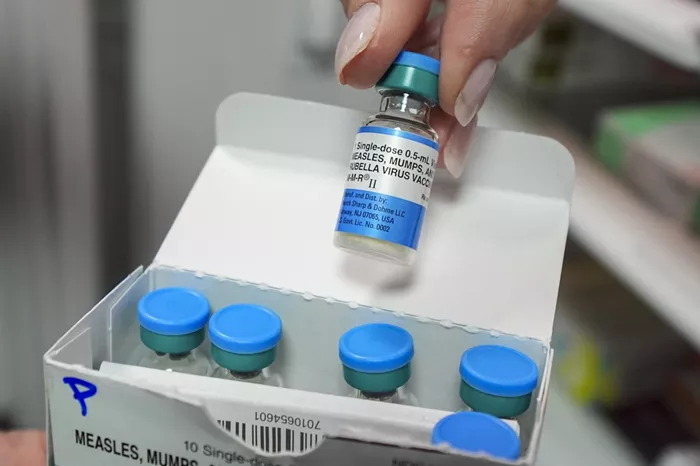
The United States recorded a historic increase in vaccine exemptions among kindergartners during the 2024–2025 school year, raising alarm among public health experts as measles cases climb to their highest level in decades. New data released Thursday by the U.S. Centers for Disease Control and Prevention (CDC) reveals that 3.6% of incoming kindergartners were exempted from at least one required immunization—affecting an estimated 138,000 children. This marks the highest exemption rate on record and continues a troubling upward trend that has persisted over the past four years.
Vaccination coverage across all routine childhood vaccines declined last year, with measles-mumps-rubella (MMR) immunization rates falling to 92.5%. This marks the fifth consecutive year that MMR coverage has remained below the federal target of 95%—a threshold considered essential for community protection against the highly contagious virus. Approximately 286,000 kindergartners nationwide had not completed the MMR series as the new school year began.
“The vast majority of this year’s measles cases have occurred in unvaccinated children,” the CDC noted. “Vaccination remains the most effective way to protect children from serious diseases like measles and whooping cough.”
Still, the agency acknowledged the complex dynamics influencing parental decisions, stating, “The decision to vaccinate is a personal one. Parents should consult their healthcare providers on options for their families”—language reflecting a more tempered stance echoed by some public officials.
Non-Medical Exemptions Driving Decline
The increase in exemptions is largely attributed to non-medical reasons. According to the CDC, 3.4% of kindergartners were exempted on philosophical or religious grounds, while just 0.2% received medical exemptions.
Forty-five states currently permit religious exemptions to school vaccine requirements, while 15 states allow personal or philosophical exemptions, according to the American Academy of Pediatrics (AAP). Only five states—California, Connecticut, Maine, New York, and West Virginia—restrict exemptions to medical reasons. Of these, four met the federal 95% MMR coverage benchmark.
“Vaccines are safe, effective, and critical to protecting community health,” said Dr. Susan Kressly, president of the AAP. “At a time when preventable diseases are resurging, we need unified, clear communication from leaders to encourage immunization.”
The AAP reaffirmed its stance this week advocating for the elimination of non-medical exemptions, citing that current exemption policies are frequently misused. “The benefits of vaccines far outweigh any potential risks,” said Dr. Sean O’Leary, chair of the AAP Committee on Infectious Diseases.
State-Level Trends and Legal Shifts
In 36 states, vaccine exemption rates increased in the 2024–2025 school year. Seventeen states reported that more than 5% of kindergartners were exempt—well above the rate that would allow communities to meet federal immunization targets.
A notable case is Mississippi, where a 2023 federal court ruling paved the way for religious exemptions. The state’s MMR vaccination rate dropped by about one percentage point following the policy change.
Texas, which has seen a consistent decline in MMR coverage over the last decade, now reports a 93.2% rate among kindergartners. Exemptions in the state have exceeded 4%, and a newly passed law will allow exemption forms to be downloaded directly from the state health department’s website starting in September—prompting concern from local officials.
“We were clear during testimony: the state must present a consistent message in support of vaccines,” said Dr. Philip Huang, director of the Dallas County Health Department. “We’re deeply worried about the implications of this policy shift.”
Erosion of Herd Immunity Heightens Outbreak Risk
Experts warn that even small annual declines in vaccine coverage can erode herd immunity, especially as vaccine-hesitant individuals tend to cluster in specific geographic areas.
“We’re seeing more places where even catch-up efforts won’t get us to 95% coverage,” said Dr. Josh Williams, a pediatrician at Denver Health. “In some communities, herd immunity is already compromised, leaving children vulnerable to vaccine-preventable diseases like measles.”
Williams co-authored a 2019 study showing that when states eliminate personal belief exemptions, religious exemption rates tend to spike—suggesting that some parents are seeking workarounds to avoid immunization mandates.
Outbreaks May Renew Urgency Around Vaccination
This year’s measles surge has led to dozens of hospitalizations and three deaths—largely among unvaccinated children—and could be a wake-up call for some families. Texas has borne the brunt of the outbreak, reflecting the state’s below-average immunization rates and rising exemptions.
Despite the grim statistics, there are signs that concern about disease spread may motivate some families to act.
“In Denver, we’ve had parents proactively seek out MMR vaccination ahead of the school year,” said Williams. “They’re worried about measles in schools and daycares and want their children protected.”
He emphasized that vaccine advocates must continue to foster trust: “Most families still vaccinate on schedule. In communities where that’s not the case, we need local voices—parents talking to parents—to help restore confidence in immunization.”
Read more:
Pharmacists Reveal Supplements That Shouldn’t Be Taken With Coffee
Low-Dose X-Rays Offer Relief for Arthritis and Tendinitis Sufferers
Black Men Less Likely to Get Advanced Scans for Prostate Cancer
