
A 12-year-old boy from South Carolina has died after contracting a rare and deadly brain infection caused by a microscopic organism found in freshwater, according to his family’s attorney.
Jaysen Carr, a middle school student, became infected after swimming in Lake Murray, a popular lake near Columbia. He died on July 18, his family’s lawyer, Tyler D. Bailey, confirmed in a Facebook post.
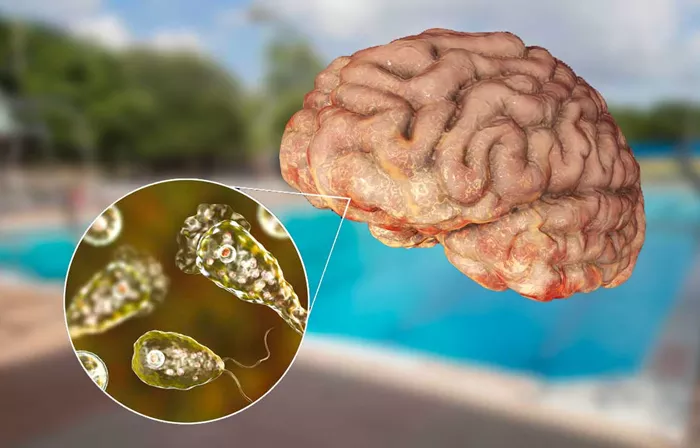
Doctors at Prisma Health Children’s Hospital later confirmed that the infection was caused by Naegleria fowleri, a brain-eating amoeba that thrives in warm freshwater. It can cause a fatal condition called primary amebic meningoencephalitis (PAM).
Dr. Anna-Kathryn Burch, an expert at Prisma Health, said in a news briefing that the amoeba can be found in most freshwater locations in South Carolina and is common across the southeastern U.S. She noted that risk increases in the summer, when water levels drop and temperatures rise.
Although rare, infections from Naegleria fowleri are almost always fatal. The U.S. Centers for Disease Control and Prevention (CDC) reports that between 1962 and 2024, only 167 cases were recorded in the United States. Of those, only four people survived.
See also: Woman Dies After Using Tap Water in Nasal Rinse, Highlighting Brain Amoeba Risks
Most people who come into contact with the amoeba do not get sick. It becomes dangerous only when contaminated water enters the body through the nose, usually while swimming or diving. Once inside, the amoeba moves to the brain, where it begins to destroy brain tissue.
The infection progresses rapidly. According to the CDC, early symptoms include headache, fever, nausea, and vomiting.
Tragically, Jaysen’s case is not the first. In 2022, a child died after swimming in a river in Nebraska. In 2020, a 6-year-old boy died after playing with water from a hose or splash pad in Texas. Other fatal cases have occurred in North Carolina and New Jersey, often linked to unchlorinated or untreated water.
While water parks and splash pads are typically safe when properly treated with chlorine, the CDC urges caution. The amoeba has also been linked to nasal rinsing with unsafe water. Earlier this year, a 71-year-old woman died after using tap water from an RV for nasal irrigation.
To reduce risk, the U.S. Food and Drug Administration (FDA) recommends using only boiled, distilled, or sterile water in neti pots and other nasal rinsing devices.
Jaysen’s death serves as a heartbreaking reminder of the risks posed by natural water sources during the summer months. Health officials continue to stress the importance of awareness, prevention, and safe water practices.
Related topics:
Cat-Linked Parasite Could Disrupt Brain Function, Experts Warn
