
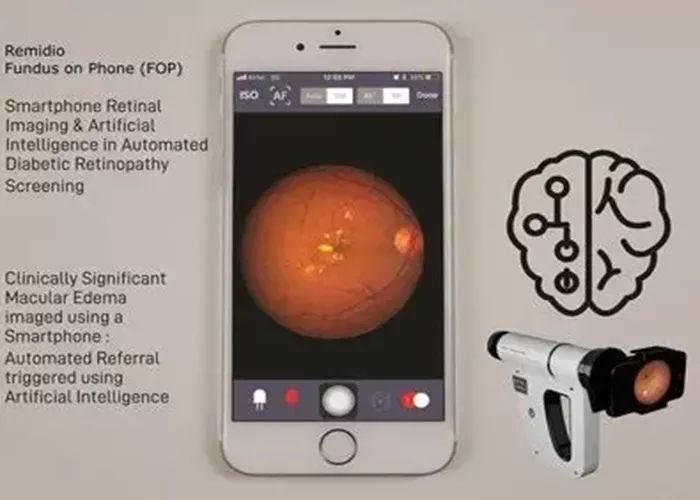
Phys.org reported on July 15 that a research team from the University of Texas Health Science Center has developed a groundbreaking device dubbed the “Smartphone AI Retinal Tracker,” revolutionizing early screening for diabetic retinopathy. This innovative tool can analyze retinal images in just 1 second with an unprecedented accuracy rate of 99%, marking a significant leap forward in addressing a condition that affects millions globally.
At the core of this breakthrough is the seamless integration of advanced artificial intelligence (AI) into a portable, smartphone-compatible device. By leveraging deep learning algorithms trained on vast datasets, the system empowers ordinary smartphones to perform retinal image analysis at a professional level—eliminating the need for bulky, expensive medical equipment.
This accessibility is transformative: it allows ophthalmologists to drastically boost screening efficiency in clinical settings while enabling primary care providers, even in remote or underserved areas, to conduct eye health checks during routine visits. For regions lacking specialized medical resources, the device offers a lifeline, ensuring high-quality retinal assessments are no longer confined to urban hospitals.
The urgency of this innovation is underscored by the global diabetes crisis: over 100 million people live with diabetes, and diabetic retinopathy has emerged as the leading cause of preventable blindness. To tackle this, the research team spent years curating a diverse database of tens of thousands of retinal images, spanning various ethnicities, age groups, and disease stages. This breadth ensures the AI system’s reliability across diverse populations.
Rigorous testing has confirmed its standout features: rapid 1-second staging of diabetic retinopathy, precise differentiation between the condition and other similar eye diseases (such as glaucoma or macular degeneration), user-friendly operation, and cost-effectiveness—critical factors for widespread adoption.
Experts predict that this technology will redefine mobile healthcare, equipping devices with professional-grade ophthalmic capabilities. With the potential to screen billions worldwide, it could fundamentally shift how diabetic eye diseases are prevented and treated, turning early detection from a luxury into a global standard and saving countless individuals from irreversible vision loss.
Related topics:
Toddler Virilised by Father’s Testosterone Gel: Safety Warnings Issued
Gen Z Men Drive Trillion-Dollar Shift in Male Health Industry
Living With Low Testosterone? Weight Loss Drugs Offer New Hope
