
High-functioning anxiety, though not a clinical diagnosis, has become a vital descriptor in modern mental health discourse, borrowing “high-functioning” from terms like “high-functioning autism” to emphasize social and professional capability.
Unlike clinical anxiety disorders that impair daily life, it coexists with achievement: those affected often excel in careers, channeling their inner restlessness into relentless drive while masking profound inner turmoil.
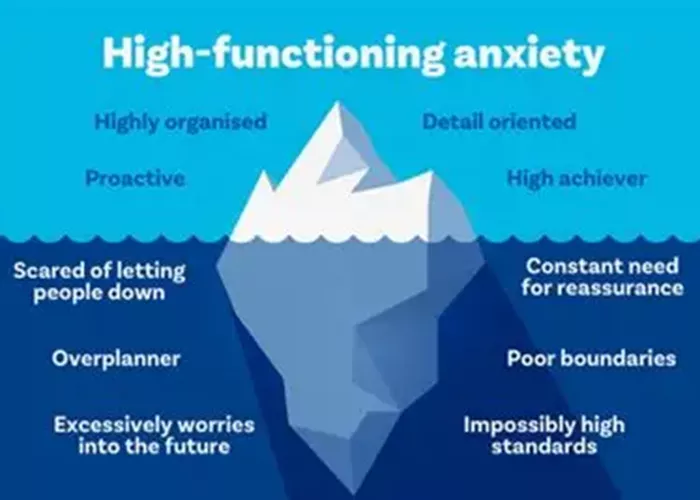
Its apparent “strengths” are striking: a cheerful demeanor that puts others at ease, proactive habits that earn reputations for reliability, meticulous organization, and an eye for detail that makes them indispensable in workplaces. Yet these traits spring from a cycle of self-imposed pressure.
Beneath the surface lies perfectionism that turns minor flaws into crises, overthinking that replays conversations for hours, an inability to say “no” that leads to burnout, and a fear of idleness that makes rest feel like failure. Hidden struggles—restlessness, muscle tension, overeating as a coping mechanism, or sleepless nights—further drain their energy.
Data from the U.S. National Institute of Mental Health suggests 18% of adults with anxiety fit this profile: outwardly successful, yet silently, their accomplishments bought with exhaustion and long-term health risks.
For relief, a simple breathing exercise can help: Inhale slowly through the nose for 5 counts (feel your belly expand), hold for 5, exhale fully for 5, then take 2 normal breaths and repeat. Practicing this 5 minutes daily for two weeks, ideally at a fixed time, builds calm.
For persistent stress, professional help or confiding in loved ones is crucial. True well-being, after all, lies not in maintaining a flawless facade, but in facing oneself with honesty and compassion.
Related topics:
Surge in Nicotine Poisoning Among Babies and Toddlers Alarms Experts
