
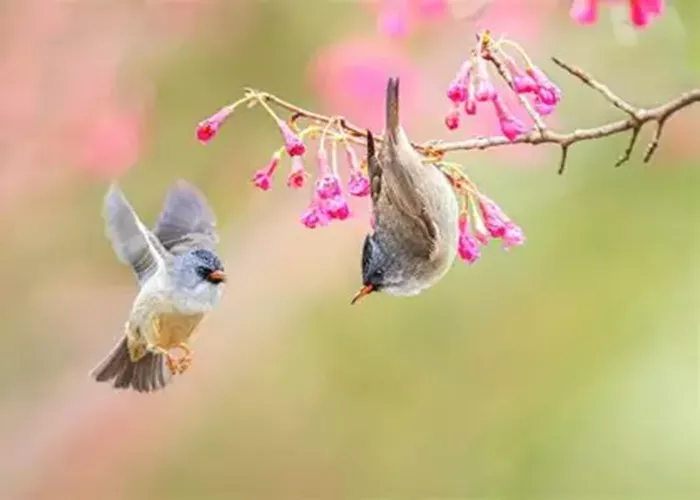
Bird-watching, a popular nature-based pastime, may offer unique mental health benefits for college students, according to a new U.S. study. It found that engaging with nature improves psychological well-being, and compared to simple outdoor activities like walking, bird-watching yields higher levels of subjective happiness.
Conducted by researchers at North Carolina State University, the study divided 112 college students into three groups: a control group, a walking group, and a bird-watching group. Participants in the bird-watching and walking groups engaged in their respective activities for over 30 minutes, five times a week. Researchers then assessed changes in their self-reported subjective well-being and psychological distress.
To measure happiness quantitatively, the team used the World Health Organization’s Five Well-Being Index (WHO-5), a 5-question survey. Participants rated statements about their well-being over the past two weeks on a scale from 0 to 5; scores were summed to give a total between 0 (worst quality of life) and 25 (best). Psychological distress was evaluated using separate questionnaires.
Results showed all three groups saw improvements in their WHO-5 scores. Notably, the bird-watching group started with lower scores but ended with higher happiness levels than the other two groups. Additionally, both nature-based groups—bird-watchers and walkers—reported reduced psychological distress, highlighting nature’s role in easing mental strain.
Researchers emphasize that bird-watching is easy to practice, suggesting it could be a simple go-to for stress relief. As the study indicates, when feeling pressured, stepping outside to watch birds might be more rewarding than just taking a stroll.
Bird-watching, a popular nature-based pastime, may offer unique mental health benefits for college students, according to a new U.S. study. It found that engaging with nature improves psychological well-being, and compared to simple outdoor activities like walking, bird-watching yields higher levels of subjective happiness.
Conducted by researchers at North Carolina State University, the study divided 112 college students into three groups: a control group, a walking group, and a bird-watching group. Participants in the bird-watching and walking groups engaged in their respective activities for over 30 minutes, five times a week. Researchers then assessed changes in their self-reported subjective well-being and psychological distress.
To measure happiness quantitatively, the team used the World Health Organization’s Five Well-Being Index (WHO-5), a 5-question survey. Participants rated statements about their well-being over the past two weeks on a scale from 0 to 5; scores were summed to give a total between 0 (worst quality of life) and 25 (best). Psychological distress was evaluated using separate questionnaires.
Results showed all three groups saw improvements in their WHO-5 scores. Notably, the bird-watching group started with lower scores but ended with higher happiness levels than the other two groups. Additionally, both nature-based groups—bird-watchers and walkers—reported reduced psychological distress, highlighting nature’s role in easing mental strain.
Researchers emphasize that bird-watching is easy to practice, suggesting it could be a simple go-to for stress relief. As the study indicates, when feeling pressured, stepping outside to watch birds might be more rewarding than just taking a stroll.
Related topics:
Why Suicide Rates Are High in Bipolar Disorder and How to Help
Is Fibroid Dangerous During Pregnancy?
Most Prostate Cancer Patients Following NCCN Guidelines Live Long, Healthy Lives
