
The United States has recorded 1,288 measles cases so far in 2025, surpassing the total number of cases in 2019 and marking the worst year for the disease in more than three decades. The Centers for Disease Control and Prevention (CDC) confirmed the updated tally on Wednesday, warning that the number could continue to rise in the second half of the year.
The figure is now 14 cases higher than the 2019 count, a year when the U.S. nearly lost its measles elimination status. Three people — two children in Texas and one adult in New Mexico — have died from the disease this year. All were unvaccinated.
Texas Outbreak Slows, But Numbers Remain High
Texas remains the hardest-hit state, reporting 753 outbreak-related cases across 36 counties, according to state data. Gaines County, the early epicenter of the outbreak, has logged 414 cases since January, affecting nearly 2% of its population.
Despite these high numbers, health officials say there is no longer active transmission in Gaines County. However, Lamar County continues to report new infections, and 39 other cases are under investigation for potential links to the wider outbreak.
Health authorities confirmed two child deaths in Texas. An 8-year-old died on April 3 from what was described as “measles pulmonary failure,” while a 6-year-old passed away in February. Neither child had underlying health conditions or was vaccinated.
Multiple States Facing Active Outbreaks
Measles outbreaks — defined by the CDC as three or more connected cases — are occurring in at least 14 U.S. states:
- Arizona: Four unvaccinated individuals in Navajo County contracted the virus after international travel.
- Colorado: A 10-case outbreak tied to a Turkish Airlines flight; 16 total cases statewide.
- Georgia: Three cases in metro Atlanta confirmed in June, with three more earlier in the year.
- Illinois: Eight cases from a southern Illinois outbreak; two more in Cook County.
- Iowa: Six cases total, four in one household in Johnson County.
- Kansas: 87 cases, mostly in Gray County; five new cases reported this week.
- Kentucky: An outbreak of eight cases in Fayette and Woodford counties; 11 total statewide.
- Michigan: 18 total cases; outbreaks occurred in Grand Traverse and Montcalm counties.
- Missouri: Seven cases, five of them in one family in Cedar County.
- Montana: 25 cases, 17 in Gallatin County — the state’s first measles in 35 years.
- North Dakota: 34 cases; most unvaccinated and spread across five counties.
- New Mexico: 95 cases, including 14 in a Luna County jail. One unvaccinated adult died in March.
- Oklahoma: 17 confirmed and three probable cases; counties not disclosed.
- Utah: Nine cases, with at least three separate clusters reported.
Outbreaks Also Worsening in Canada and Mexico
Outside the U.S., Canada and Mexico are also battling major measles outbreaks:
Ontario: 2,223 cases since October, including one infant death.
Alberta: 1,246 cases as of this week.
Chihuahua, Mexico: 2,966 cases and eight deaths, according to health ministry data.
How Measles Spreads and Who’s at Risk
Measles is caused by a virus that spreads through the air when an infected person coughs, sneezes, or breathes. The disease was declared eliminated in the U.S. in 2000 due to widespread vaccine use but has resurged in recent years due to declining immunization rates.
Communities with low vaccination coverage are particularly vulnerable. Most current outbreaks are tied to unvaccinated groups or individuals exposed to measles abroad.
MMR Vaccine Still the Best Protection
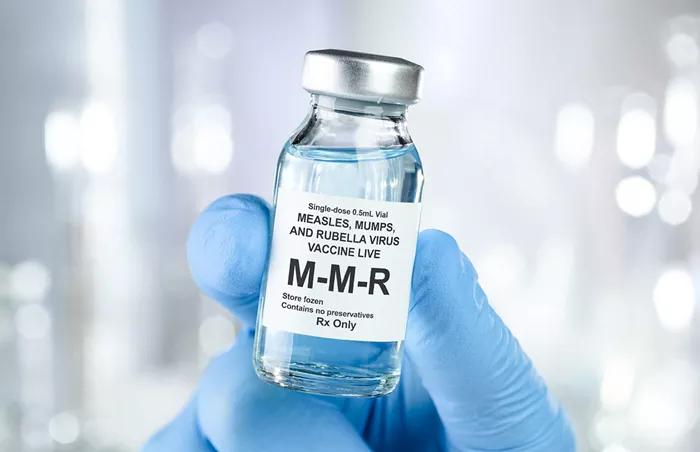
The CDC continues to recommend the measles, mumps, and rubella (MMR) vaccine as the most effective way to prevent infection:
- Children should receive the first dose between 12–15 months and the second dose between 4–6 years.
- Adults unsure of their vaccination status can get another dose safely.
- Those vaccinated before 1968 with an older, less effective version may need to be re-vaccinated.
- People born before 1957 are usually considered immune due to childhood exposure.
High community vaccination rates — ideally over 95% — create herd immunity, making it harder for measles to spread. But since the COVID-19 pandemic, childhood vaccination rates have dropped, and exemption requests have increased.
Symptoms and Complications of Measles
Measles typically begins in the respiratory system and spreads through the body. Symptoms include:
- High fever
- Runny nose
- Cough
- Red, watery eyes
- Rash starting on the face and spreading downward
The rash usually appears three to five days after the first symptoms. The fever can spike above 104°F when the rash develops.
While most children recover, measles can cause severe complications such as:
- Pneumonia
- Blindness
- Encephalitis (brain swelling)
- Death
Treatment and Management
There is no cure for measles. Doctors manage the illness by:
- Easing symptoms
- Preventing complications
- Ensuring hydration and rest
Hospitalization may be needed in severe cases, especially among the unvaccinate
READ MORE
U.S. Measles Cases Reach 25-Year High Amid Vaccine Decline
Measles Outbreak Grows as Vaccine Fears Threaten Public Health
