
BMW is set to reveal its refreshed 2027 i7 electric sedan at the Auto China 2026 event in Beijing on April 22. This update introduces a major advancement in battery technology developed in partnership with Croatian electric hypercar specialist Rimac. The new i7 will feature BMW’s sixth-generation (Gen6) battery system, incorporating high-energy-density cylindrical lithium-ion cells produced by Rimac. This marks the first time BMW employs the Gen6 4695-format cylindrical cells in a production model, moving away from the prismatic cells used previously.
The collaboration between BMW and Rimac began secretly in 2022 and was publicly announced in 2024. Since then, both companies have worked closely to develop a scalable and efficient battery pack that offers approximately 20% higher energy density compared to earlier battery generations. This enhancement is expected to significantly increase the driving range of the i7 while also improving charging speeds.
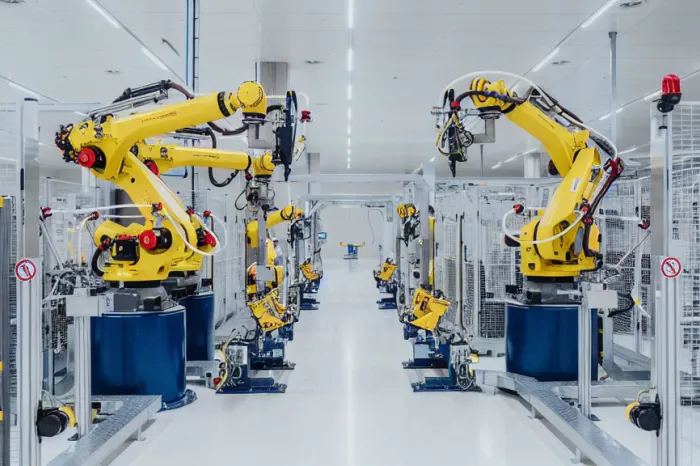
Rimac manufactures the new battery packs at its state-of-the-art facility near Zagreb, Croatia. The production site, spanning around 90,000 square meters with a dedicated 15,000 square meters for BMW’s batteries, represents one of Europe’s largest industrial projects focused on electric vehicle battery production. Once assembled, these battery packs are shipped to BMW’s Dingolfing plant in Germany, where the 7 Series and i7 models are exclusively built.
BMW’s Senior Vice President of High-Voltage Battery Development, Dr. Thomas Engelhardt, emphasized the importance of this cooperation as part of BMW’s broader Neue Klasse strategy. This approach aims to integrate advanced electric drive technologies across BMW’s entire lineup, starting with flagship models like the i7. The battery system combines Rimac’s expertise in cylindrical cell integration with BMW’s Gen5 module design to unlock improved performance in energy storage, range extension, and faster charging capabilities.
The current generation i7 already supports fast charging up to 195 kW, enabling roughly 170 kilometers (106 miles) of range in just 10 minutes of charging. The new battery system is expected to push these numbers even higher, although it is unlikely to reach the ultra-fast charging rates seen in BMW’s newer Neue Klasse models that use an 800-volt architecture. Still, the upgrade should make the i7 a stronger competitor against rivals such as the Porsche Taycan, Lucid Air, and Tesla Model S within the luxury electric sedan segment.
This battery partnership also sets a precedent for future BMW electric vehicles. Mate Rimac, founder and CEO of Rimac Group, described this contract as one of the most significant in Croatian industrial history. He highlighted how this project marks Rimac’s evolution from a niche supplier of high-performance supercar components to a Tier 1 supplier capable of supporting high-volume electric vehicle programs.
With the refreshed design incorporating BMW’s Neue Klasse styling cues—such as slimmer headlights and a refined grille—the new i7 aims to combine aesthetic appeal with cutting-edge technology. The upcoming launch is expected not only to showcase this technical leap but also to reinforce BMW’s commitment to electrification and innovation in the luxury EV market.
