
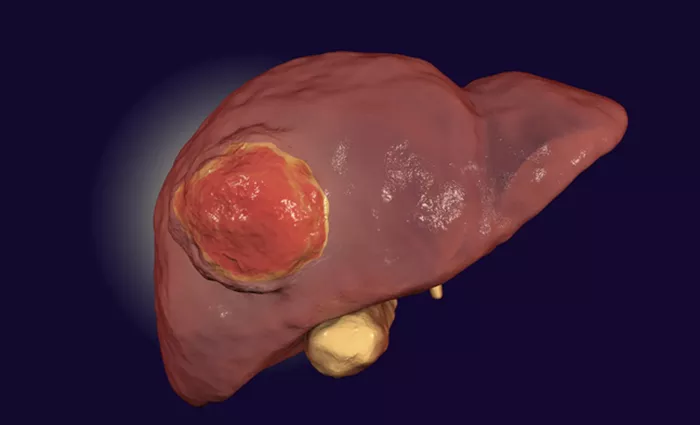
Researchers have found that reducing protein intake could help people with liver problems lower their risk of developing liver cancer and slow the disease’s progression. A study led by scientists at Rutgers University and published in Science Advances demonstrated that mice fed a low protein diet experienced slower liver tumor growth and fewer cancer-related deaths. The findings highlight how a liver unable to manage metabolic waste properly can create conditions that promote cancer development.
Liver cancer remains one of the deadliest cancers in the United States, with a five-year survival rate of only about 22%. According to estimates, more than 42,000 new cases and over 30,000 deaths are expected in 2025. Many more people live with liver conditions that raise cancer risk. Approximately one in four adults in the U.S. has fatty liver disease, a condition that, along with viral hepatitis and heavy alcohol use, can lead to cirrhosis and increase the likelihood of developing liver cancer.
Wei-Xing Zong, senior author of the study and distinguished professor at the Rutgers Ernest Mario School of Pharmacy, emphasized the importance of dietary choices for people with liver disease. “If you have liver damage that prevents your liver from functioning correctly, you should seriously consider reducing your protein intake to lower the risk of developing liver cancer,” Zong said.
The study explains that when the body breaks down protein, nitrogen is converted into ammonia, a toxic substance for both the brain and body. Normally, the liver transforms ammonia into urea, which is safely excreted in urine. However, in people with liver dysfunction, this process is often impaired. Researchers have long questioned whether ammonia buildup is a consequence of liver cancer or a factor that drives tumor growth.
To investigate, the Rutgers team conducted experiments in mice, creating liver tumors while manipulating the animals’ ammonia-processing capabilities. Mice unable to properly handle ammonia developed larger tumors and died faster than those with normal liver function. Further analysis revealed that excess ammonia was incorporated into amino acids and nucleotides, compounds essential for cancer cell growth.
The researchers then tested whether dietary changes could reduce ammonia accumulation. Mice on a low protein diet showed significantly slower tumor growth and improved survival compared with mice consuming standard protein levels. While people with healthy livers can generally tolerate higher protein intake, those with liver damage may benefit from reducing protein. Experts caution, however, that any diet changes should be guided by medical professionals, as protein is critical for maintaining strength and muscle mass during cancer treatment.
This research provides a new perspective on managing liver cancer risk through dietary intervention, particularly for individuals with liver dysfunction. Reducing protein intake may offer a practical approach to slow tumor progression and improve outcomes in patients at high risk of liver cancer.
