
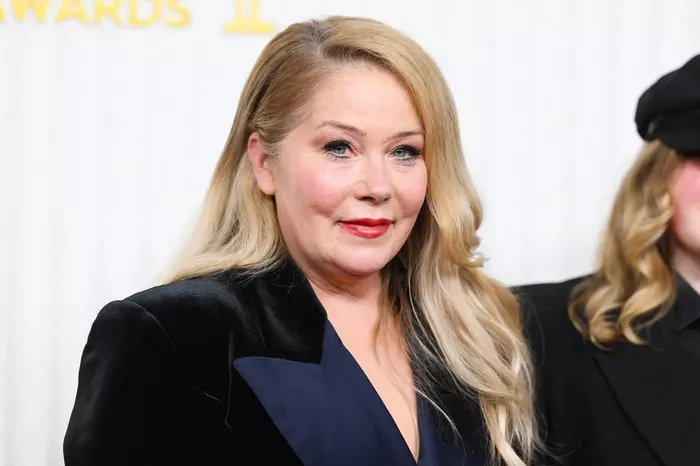
Christina Applegate is known for her candid discussions about living with multiple sclerosis (MS), but the actress now says that openness grew out of a painful lesson from her earlier battle with breast cancer.
In her new memoir You With the Sad Eyes, the Emmy-winning actress reflects on the public image she presented after her cancer diagnosis and the regret she later felt about how she framed that experience.
“Frankly, I was disgusted by what came out of my mouth,” Applegate, 54, wrote in the book, recalling how she once described her illness in overly positive terms.
Applegate was 36 when a routine MRI in 2008 revealed early-stage breast cancer. Genetic testing later showed she carried the BRCA1 mutation, which significantly increases the risk of developing breast and ovarian cancers. Faced with the diagnosis, she chose to undergo a double mastectomy and was eventually declared cancer-free.
After her treatment, Applegate became a vocal advocate for breast cancer awareness. She publicly shared her story and launched an organization aimed at promoting early detection and helping high-risk women access screening services.
She later explained that activism became a way to cope with the emotional toll of losing her breasts.
“It was my way of coping with how brokenhearted I was to lose my breasts,” she wrote. “To this day, I feel emotionally and physically mangled by what I went through.”
Despite the advocacy work, Applegate now says she regrets how she portrayed her personal experience during some early public appearances. One moment that stands out to her is an interview on The Oprah Winfrey Show just a month after her surgery.
Looking back, she believes she missed an opportunity to speak honestly about her emotional reality.
“I thought I should tell everyone that it was a blessing,” she wrote.
The perspective, she noted, was influenced by advice from fellow breast cancer survivor and musician Melissa Etheridge, who told her that the experience could represent a chance to start over and change her life.
At the time, Applegate embraced that message during interviews. But years later, she views it differently.
“Here’s how I feel about that interview now,” she wrote bluntly. “It was bulls—t.”
While she appreciated the opportunity to raise awareness, the actress says she now believes presenting the illness as something positive may have unintentionally minimized the suffering of others going through cancer treatment.
“I had lied, thinking I was being uplifting,” she admitted. “I was acting like Little Ms. Warrior, but that’s not how I really felt.”
Behind the optimistic tone she projected publicly, Applegate said she was struggling with grief and isolation.
“The truth was, I was alone and sad and mourning something that is the most intimate and devastating of amputations,” she wrote. “No amount of plastic surgery can ever make up for it.”
The experience, she says, fundamentally changed how she approaches discussions about illness. That perspective became especially important after she received another life-altering diagnosis.
In June 2021, at age 49, Applegate revealed that she had been diagnosed with multiple sclerosis, a chronic autoimmune disease that affects the central nervous system.
MS occurs when the immune system attacks myelin, the protective coating around nerve fibers. The resulting inflammation disrupts communication between the brain and body. The condition affects nearly one million Americans, with women about three times more likely than men to be diagnosed.
Symptoms vary widely and can include severe fatigue, chronic pain, muscle weakness, vision problems, mobility challenges and bladder issues.
Reflecting on her MS journey, Applegate says she no longer feels compelled to soften the reality of serious illness.
“I’m not going to lie anymore. MS sucks,” she wrote.
According to Applegate, the experience taught her that honesty — rather than forced optimism — is often the most meaningful way to support people facing difficult diagnoses.
“We need to stop ramming blessings down the throats of people in distress,” she wrote. “That’s not how we help people. We help people by radical, thoughtful honesty.”
