
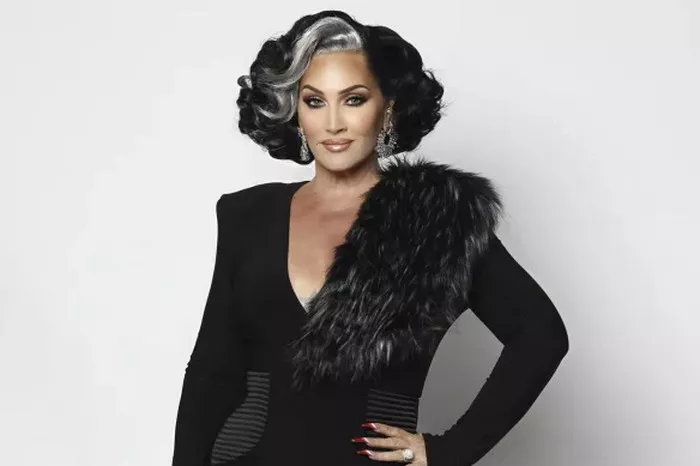
Michelle Visage, best known for her role as the no-nonsense, supportive judge on RuPaul’s Drag Race, is now stepping into the documentary spotlight with Explant, a film examining the history, controversies, and health risks surrounding breast implants.
In a recent interview conducted over Zoom, Visage spoke candidly about the documentary, her own experiences with implants, and the importance of informed consent for patients considering cosmetic procedures. “This film is not anti-plastic surgery. It’s pro-transparency,” Visage said. “I’m absolutely never going to shame a woman for having breast implants. None of this movie is meant to scare people. It’s meant to wake people up.”
A Personal Connection to the Topic
Visage shared that her interest in the subject is deeply personal. She has undergone multiple procedures, including breast reconstruction following a bilateral mastectomy due to cancer and cheek implants after a car accident. These experiences informed her approach to the film and her advocacy work.
“Women have been made a mockery of for years, told to go home and have a glass of wine or take a Prozac when really we’re not fine,” she said. “There are hundreds, thousands of us who have suffered—and even died—from having breast implants. The truth needs to be out there.”
Exploring Breast Implant Illness
Explant traces the development and marketing of breast implants, including the errors and oversights of medical professionals who prioritized sales over patient safety. The film also addresses Breast Implant Illness (BII), a range of symptoms increasingly linked to silicone leakage, autoimmune reactions, and, in rare cases, a type of lymphoma.
Visage highlighted the frustration many women experience when trying to have their symptoms acknowledged. “They don’t give a shit if I’m a celebrity. They really don’t,” she said, recounting her own struggles with autoimmune disorders and dismissive medical encounters.
The documentary also examines the growing online community of women advocating for their health, sharing experiences, and pressuring medical professionals to listen. Some hospitals, including groups in Michigan, are now requiring patients seeking breast enhancements to sign detailed informed-consent forms—an approach Visage champions in both her film and advocacy.
Advocacy and Advice for Patients
Throughout the interview, Visage emphasized the importance of patient empowerment. She encouraged women to seek doctors who take their concerns seriously, noting that many plastic surgeons dismiss BII because it could impact their earnings.
“Ask the doctor if they believe Breast Implant Illness is real,” she advised. “Unless the doctor says, ‘Absolutely I believe it’s real,’ I would run. Most of the doctors that don’t believe it are plastic surgeons because it affects their wallet.”
Her guidance extends to understanding that implants can be removed safely. “As long as you know you have an option, that’s what matters,” she said. “Women should be able to make informed decisions and advocate for themselves.”
Balancing Humor, Education, and Awareness
While tackling serious health issues, Explant also incorporates moments of levity. Visage shared humorous interactions with her daughter, Lola, who initially questioned her decision to remove her own implants. “We’re talking about tits,” Visage laughed. “So many people have divided ideas about what they are and what they should be. I love boobs—big, small, no boobs now—and I love it.”
Visage hopes the documentary will encourage transparency in the medical community. She envisions a future where all surgeons provide clear information about potential risks, allowing patients to make fully informed choices.
“Just informed plastic surgery,” she said. “I love it. I want everyone to love it too.”
