
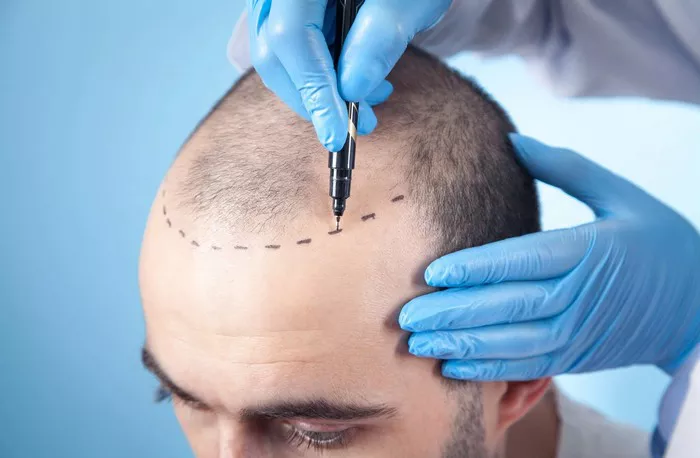
After losing 50 kilograms in a dramatic fitness transformation, Mike Denman felt he had achieved nearly everything he set out to do. But despite becoming healthier and more energetic, he believed one final change was needed to fully match how he felt inside: restoring his hair.
The 45-year-old father of two decided to undergo what is believed to be one of the largest hair transplant procedures performed in the United Kingdom, marking the final stage of his personal reinvention.
A Transformation That Sparked a New Goal
Denman said the decision came after he completed his weight-loss journey and noticed a disconnect between his physical health and his appearance.
“I wanted to line up what I saw in the mirror with how I felt,” he explained. “I didn’t feel like that older dad anymore, but I still looked like one.”
Before losing weight, he had not seriously considered a hair transplant. “I’d almost let my body go, and it just wasn’t something I was conscious of,” he said.
Once he began researching options and found a specialist he trusted, Denman moved quickly. “I tend to make decisions fast. Once I was confident the doctor could deliver a good result, I decided to go ahead,” he added, noting he felt little anxiety about the procedure.
A Record-Scale Procedure
Denman underwent surgery performed by Dr. Ted Milne, receiving a total of 7,848 grafts—an unusually high number for a single patient.
“We think it was the largest procedure done in the UK in terms of graft numbers,” Denman said.
The treatment combined two techniques: Follicular Unit Extraction (FUE) and Follicular Unit Transplantation (FUT). The process lasted two days and involved thousands of meticulous incisions.
“He did almost 8,000 individual incisions, and then they were placed one by one with tweezers,” Denman explained. A team of three technicians assisted, ensuring each graft was positioned at the correct angle to create a natural look.
“It’s quite complicated work,” he said.
Recovery and the Waiting Period
Ten days after the operation, Denman returned for a follow-up appointment where scabs were removed and early signs of growth became visible.
However, like many transplant patients, he experienced temporary shedding several weeks later—a normal reaction known as “shock loss.”
“For some people that can be worrying, but I’d been prepared for it,” he said. “After a few weeks you can wear a cap anyway, and I used to wear caps all the time, so it wasn’t a big change.”
New growth began around the three-month mark. By four months, Denman said the results were already noticeable, and by six months they looked “really good.” The final outcome became clear roughly a year after the procedure.
A Boost in Confidence and Well-Being
Denman describes the experience as overwhelmingly positive, saying the transplant helped align his appearance with the vitality he gained through fitness.
“I think I look younger and I definitely feel younger overall,” he said. “After getting fit, I felt healthier and had more energy—but I’d still catch myself in the mirror and see an older guy because I was bald.”
He believes the change has improved his confidence and overall self-image.
Challenging the Stigma Around Hair Restoration
Denman also acknowledged that hair transplants can still carry social stigma, with some critics viewing the procedure as cosmetic or unnecessary.
“Some people say it’s a vain thing to do, but there’s a difference between vanity and self-image,” he said. “If something bothers you and fixing it gives you a positive mental effect, then it’s worth considering.”
He emphasized the importance of careful research when choosing a clinic, warning that poor results are not limited to any single country.
“People talk about bad outcomes abroad, but there are definitely places in the UK where you could get an equally poor result,” he said.
A Personal Decision, Not Just a Cosmetic One
For Denman, the transplant was not about chasing perfection but about completing a journey that began with reclaiming his health.
By addressing both fitness and appearance, he said he now feels his outward look finally reflects the changes he worked hard to achieve—bringing what he calls “the last piece of the puzzle” into place.
