
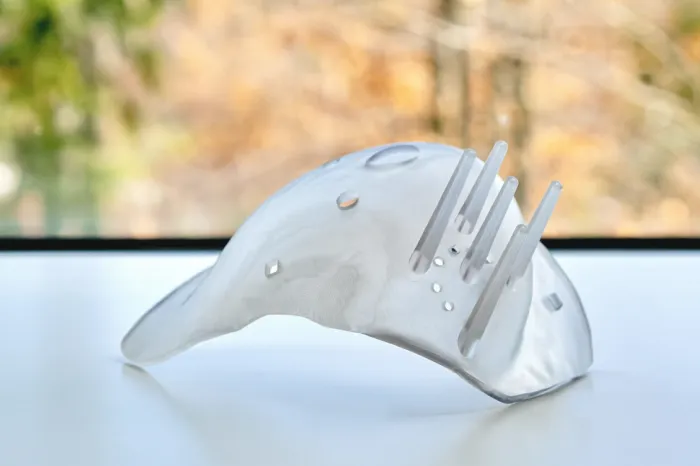
A new technology developed by CairnSurgical, a medical firm based in Lebanon, New Hampshire, aims to make breast cancer surgery more precise by helping surgeons identify the exact size and shape of tumors. The Breast Cancer Locator (BCL) System uses a custom 3D-printed form placed over the patient’s breast during surgery. This device, designed from MRI scans and tailored to each patient, marks the tumor’s boundaries more accurately than traditional methods.
Breast cancer tumors often have irregular shapes that are difficult to pinpoint. In lumpectomy procedures, the challenge is to remove all cancerous tissue while preserving as much healthy breast tissue as possible. Traditionally, surgeons mark tumors with a single wire or seed, which can make it hard to see the edges. The BCL System allows surgeons to place multiple wires through holes in the 3D form, outlining the tumor and providing clear guidance on where to operate.
About 20% to 25% of lumpectomies do not remove the entire tumor, requiring patients to have additional surgeries. However, a recent study found that the BCL System helped surgeons achieve cancer-free margins in 94% of patients. This result means fewer women need repeat surgeries, which lowers both the emotional and financial burden.
The BCL System also includes companion software called the Visualizer. This tool gives surgeons and patients a detailed virtual view of the tumor’s location and shape. Surgeons can examine these images before and during surgery, allowing for better planning and greater confidence in the operating room. Patients find the Visualizer valuable for understanding their treatment, leading to improved outcomes.
Having already received recognition as the NH Tech Alliance’s Product of the Year in 2021, the BCL System has completed patient enrollment for a pivotal U.S. trial and is being used in Europe through a limited launch. Medical experts say this technology is especially useful for complex tumors that are hard to see or feel. By increasing surgical precision, the system hopes to save women from unnecessary repeat procedures and improve the overall experience and results of breast cancer surgery.
