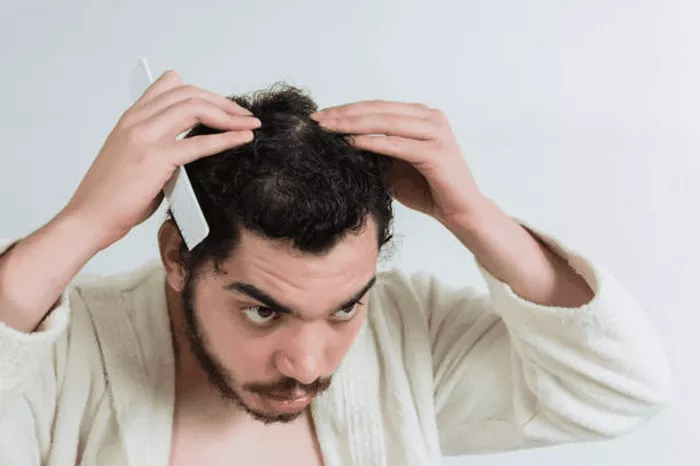
Researchers at Dr. U Hair and Skin Clinic in the Los Angeles area have identified a previously underrecognized inflammatory and early fibrotic pattern within androgenetic alopecia (AGA) that may explain why standard treatments often produce inconsistent or disappointing results. The findings were published in the peer-reviewed journal Clinical, Cosmetic and Investigational Dermatology.
Androgenetic alopecia, which includes male pattern baldness and female pattern hair loss, is typically treated with medications such as minoxidil and finasteride. However, many patients adhere to these therapies—and even undergo hair transplantation—yet continue to experience limited improvement. According to the study’s authors, a parallel inflammatory process may be undermining treatment success in a significant subset of patients.
The research describes a condition known as perifollicular inflammatory infiltrate with early fibrosis, or PIILIF. This follicle-centered inflammatory pattern affects the upper portion of the hair follicle and can exist alongside AGA, even when the scalp appears clinically normal. Because PIILIF is not easily detected without targeted biopsy, it may go unrecognized in routine clinical evaluations.
“Many hair loss sufferers do all the right things, including minoxidil, finasteride and even hair transplantation, yet still experience disappointing outcomes,” said Dr. Sanusi Umar, a board-certified dermatologist and lead author of the study. “In a meaningful subset of AGA patients, an inflammatory and early fibrotic driver may be operating in parallel. When that biology is missed, results predictably fall short.”
The retrospective analysis examined 129 AGA patients from a referral-center cohort. Using high-magnification imaging to guide scalp biopsies from both thinning and normal-appearing areas, researchers correlated microscopic findings with clinical characteristics and treatment responses. PIILIF was identified in 81% of patients, particularly among those aged 44 and older, individuals with advanced hair loss, or those with a history of poor response to conventional therapies.
The study also found that conditions frequently labeled as seborrheic dermatitis or dandruff were often misdiagnosed. Biopsy confirmed true seborrheic dermatitis in only 0.8% of patients, while PIILIF was present in the vast majority of cases. Among patients treated with a strategy addressing both hormonal drivers and immune-mediated inflammation, 67% showed improvement, while only 2% experienced suboptimal outcomes.
Based on these findings, the authors propose an AGA–PIILIF disease spectrum and recommend a dual-pathway treatment approach when indicated. This strategy combines traditional hormonal management with targeted control of follicle-centered inflammation and early fibrosis, particularly in treatment-resistant cases.
The paper further suggests that fibrosing alopecia of patterned distribution (FAPD) may represent a later stage of AGA-PIILIF. The authors advocate staging the condition based on the degree of perifollicular fibrosis to support earlier diagnosis and intervention before irreversible follicular damage occurs.
For patients who do not respond to standard therapies, the study emphasizes that simply intensifying existing treatments may not be effective. Instead, earlier diagnostic confirmation and better biological targeting may improve outcomes. While not every patient requires a biopsy, the findings support its use in unclear, advanced, or high-risk cases.
The implications also extend to hair transplant planning. In advanced or donor-limited cases, underlying inflammatory scalp biology may affect graft survival and long-term results. The researchers recommend scalp optimization and biopsy-informed decision-making rather than automatically proceeding with additional grafting.
To translate these insights into clinical practice, the authors encourage clinicians to adopt structured screening and management pathways for inflammatory-pattern AGA. Dr. Umar highlights the Inflammatory AGA Screen, also known as the PIILIF Track, as one model that can be adapted to improve early recognition and long-term management of complex hair loss cases.