
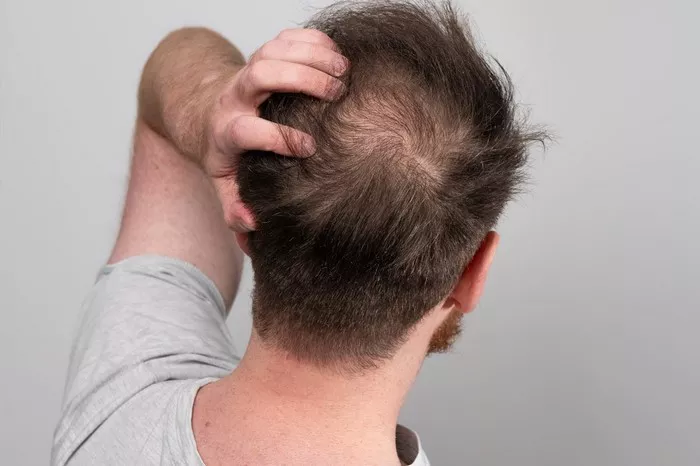
A joint research team from South Korea and Hong Kong has unveiled a wearable light therapy device designed like a hat that could offer a more comfortable and effective approach to treating hair loss. The platform, which uses flexible organic light-emitting diodes (OLEDs), was shown to suppress the aging of hair follicle cells by about 92 percent in laboratory tests.
The study was led by Professor Choi Kyung-cheol of the Korea Advanced Institute of Science and Technology (KAIST), in collaboration with Professor Yun Chi of the Hong Kong University of Science and Technology (HKUST).
Light therapy has gained attention as a safer alternative to pharmaceutical hair loss treatments, which may cause unwanted side effects when used over long periods. Existing light therapy devices, however, are typically bulky helmet-style systems that rely on point light sources such as LEDs or lasers. These rigid designs are often uncomfortable and struggle to deliver light evenly across the curved surface of the scalp.
To overcome these challenges, the researchers turned to OLED technology, which emits light uniformly from a flat surface rather than a single point. By integrating near-infrared (NIR) OLEDs into a soft, fabric-like material, the team developed a light-emitting platform that can be worn naturally inside a hat. This close contact with the scalp enables consistent and uniform light stimulation across areas affected by hair loss.
The device targets dermal papilla cells, located at the base of hair follicles and responsible for regulating hair growth. Using wavelength control technology, the researchers tuned the OLEDs to emit near-infrared light in the 730–740 nanometer range, which they identified as the most effective for activating hair follicle cells and slowing their aging process.
Laboratory experiments involving human dermal papilla cells showed that exposure to near-infrared OLED light reduced cellular aging by 92 percent compared with a control group, outperforming conventional red light therapy. The platform’s flexibility also allows users to receive treatment during everyday activities, rather than being confined to indoor sessions with heavy equipment.
“By implementing fabric-based OLEDs that are as soft as cloth, we have proposed a wearable light therapy platform that can be used in everyday life,” said Cho Eun-hae, the study’s lead author.
Professor Choi added that the thin, flexible properties of OLEDs make them particularly well suited for delivering uniform light to the scalp. The research team plans to conduct further pre-clinical studies to assess the device’s long-term safety and effectiveness before pursuing commercial medical applications.
The research was supported by South Korea’s Ministry of Science and ICT and the Ministry of Trade, Industry and Energy. The findings were published online in Nature Communications on January 10.
