
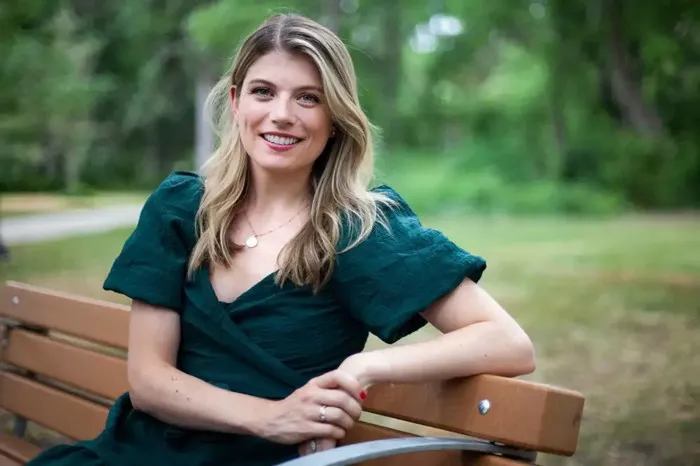
Inside Edition reporter Alison Hall is opening up about her ongoing recovery after undergoing treatment for breast cancer, offering a candid look at the physical and emotional toll of the journey—and the resilience she has found along the way.
In a series of Instagram Stories shared Wednesday, January 14, Hall, 33, reflected on the non-linear nature of healing following her diagnosis and surgery. “For me, it wasn’t linear,” she wrote. “There were parts of the recovery process where I felt more ‘me’ than ever before—more connected to my strength and my inner voice. But for a long time, both physically and mentally, I felt very fragile and not exactly stable.”
Hall was diagnosed with stage zero breast cancer in October 2024. She later underwent a double mastectomy with reconstruction in early 2025. While the experience was daunting, she said time has helped restore a sense of normalcy.
“Thankfully, about seven to nine months after my first surgery, I started noticing a lightness about me again,” Hall shared. “I stopped thinking about breast cancer and everything I had been through on a loop. I recognized myself again—but even more so, I started getting to know the new me.”
Acknowledging that life after cancer is different, Hall added that the change carries both loss and growth. “I’ll never be the same Alison from before diagnosis and there’s grief in that, but it’s also beautiful,” she wrote.
The reporter also addressed common misconceptions about mastectomy and reconstruction, emphasizing that the procedure is far more complex than it may appear. “Some people still think a double mastectomy with reconstruction is just a ‘boob job,’ and sadly that is far from the truth,” she explained, noting that all 16 nerves in each breast were cut, leaving her chest completely numb.
Despite her initial fears, Hall said the recovery process was less painful than she anticipated. “It was wildly uncomfortable, yes—the drains were terrible—but it all wasn’t nearly as bad as I expected,” she recalled. “The first few days and weeks were the hardest, but you gradually start to feel better.”
Hall credited her medical team for giving her confidence and control throughout the process. “I got so lucky by having the most incredible care team to help me make big decisions,” she said, adding that she intentionally slowed down to prioritize healing.
She also expressed deep gratitude for the support she received from her family, husband, friends—and even unexpected sources. “I’ve never felt so loved,” Hall wrote. “Support came from long-lost friends, colleagues, and even complete strangers. Some of those connections became incredibly meaningful.”
Looking ahead, Hall will continue regular follow-ups with her surgical oncologist to monitor for recurrence. She shared that her risk is now below three percent, though not entirely eliminated. “She’ll see me every six months for the next few years, and then once a year for the rest of my life,” Hall explained. “It’s amazing, but it’s not zero.”
As she continues to heal, Hall’s message underscores both the challenges and the hope that can follow a breast cancer diagnosis—one step at a time.
