
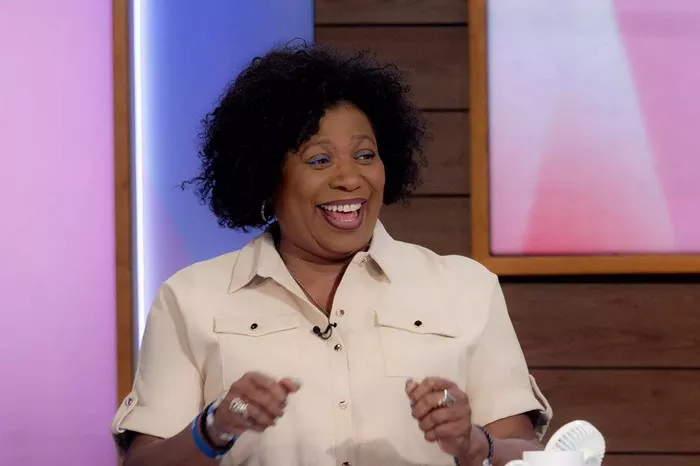
Brenda Edwards first rose to national prominence in 2005 after appearing on ITV’s The X Factor, a breakthrough that paved the way for a successful career in theatre and television. In the years since, she has starred in numerous West End productions and, from 2019, become a familiar face on ITV’s daytime panel show Loose Women, where she has recently spoken candidly about her personal life, including a new relationship.
However, the ITV star’s life took a dramatic turn in 2015 when she was diagnosed with stage 3 breast cancer at the age of 46. Edwards underwent extensive treatment, including chemotherapy and a mastectomy, followed by breast reconstruction surgery. Now cancer-free at 56, she has continued to speak openly about her experience, aiming to raise awareness and reduce stigma around breast cancer and recovery.
During a recent episode of Loose Women, the panel discussed the growing issue of botched cosmetic procedures carried out overseas, which presenters noted can cost the NHS up to £20,000 per patient to correct. While acknowledging that many people have successful procedures abroad, panellist Kaye Adams highlighted that such decisions ultimately come down to individual attitudes toward risk.
When Adams asked Edwards whether she would be prepared to take that kind of risk, the singer and actress admitted she would not. Drawing on her own medical history, Edwards explained that even her reconstructive surgery had required serious consideration. She told viewers that when she was diagnosed with breast cancer, reconstruction was presented as an option, but it was not a straightforward decision.
“There was a lot to weigh up for me on the risk side,” Edwards said, explaining that reconstruction is often classed as cosmetic surgery despite being linked to cancer treatment. She revealed that she did consider opting out of the procedure altogether, given the physical and emotional implications at the time.
Edwards added that a close friend helped her reflect on the potential impact on her mental health, pointing out the emotional challenge of living with significant physical asymmetry. The conversation, she said, made her think deeply about body image and wellbeing, acknowledging that body dysmorphia is a real and complex issue for many people.
By sharing her story, Edwards continues to use her platform to shed light on the realities of cancer recovery and the deeply personal decisions patients face, offering honesty and reassurance to others navigating similar journeys.
