
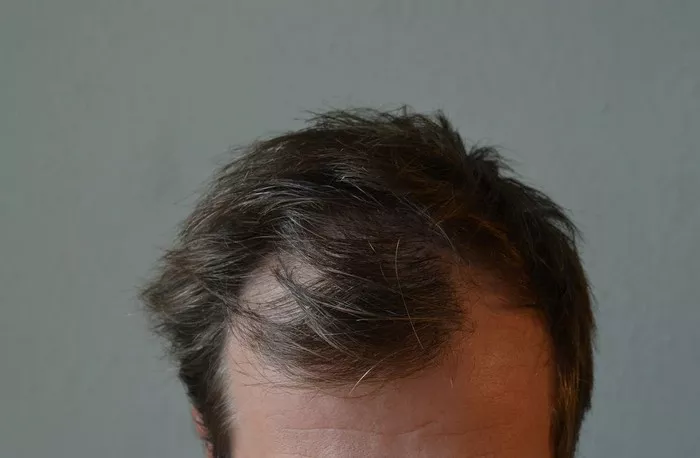
In a breakthrough that could transform hair loss treatments, researchers in 2024 identified a naturally occurring sugar with the potential to reverse hereditary-pattern baldness, the leading cause of hair loss in both men and women globally.
The discovery originated from studies on deoxyribose, a sugar that forms part of DNA, during research on wound healing in mice. Scientists at the University of Sheffield and COMSATS University in Pakistan observed that areas of skin treated with deoxyribose healed faster—and that fur around the treated sites grew back more quickly than in untreated areas.
Intrigued, the team conducted further experiments on male mice with testosterone-driven hair loss. Researchers removed the fur from the animals’ backs and applied a small dose of deoxyribose gel daily. Within weeks, treated areas exhibited “robust” regrowth, with long, thick hairs sprouting in the previously bald patches.
“The research suggests that the answer to treating hair loss might be as simple as using a naturally occurring deoxyribose sugar to boost blood supply to the hair follicles and encourage growth,” said Sheila MacNeil, a tissue engineer at the University of Sheffield.
The effects of the deoxyribose gel were comparable to minoxidil, a widely used over-the-counter treatment commonly known by the brand name Rogaine. Both treatments promoted 80 to 90 percent hair regrowth in the mice. Interestingly, combining the sugar gel with minoxidil offered no significant additional benefit.
Hereditary-pattern baldness, or androgenic alopecia, affects up to 40 percent of the population and results from a combination of genetics, hormones, and aging. Currently, the U.S. Food and Drug Administration has only approved two drugs to treat the condition: minoxidil, which slows hair loss for some patients, and finasteride (Propecia), an oral drug effective in most men but associated with potential side effects such as erectile dysfunction, reduced libido, and depression. Finasteride is not yet approved for women.
The study, led by MacNeil and biomaterial researcher Muhammad Anjum of COMSATS University, involved applying a biodegradable, non-toxic deoxyribose gel to mouse models of male-pattern baldness. The team also compared results against mice treated with minoxidil, untreated mice, and mice receiving both treatments.
Microscopic analysis revealed that deoxyribose gel not only stimulated new hair follicles but also increased blood vessel formation and skin cell growth around the treated areas—factors believed to contribute to thicker, healthier hair shafts.
While the research is still in its early stages, the findings suggest deoxyribose could one day provide a safe, natural alternative for people experiencing androgenic alopecia. Potential future applications include stimulating hair, eyelash, or eyebrow regrowth following chemotherapy.
“The research we have done is very much early stage, but the results are promising and warrant further investigation,” MacNeil said.
The team hopes that further studies may confirm whether deoxyribose could also be effective for female patients experiencing testosterone-driven hair loss, expanding the potential reach of this novel treatment.
