
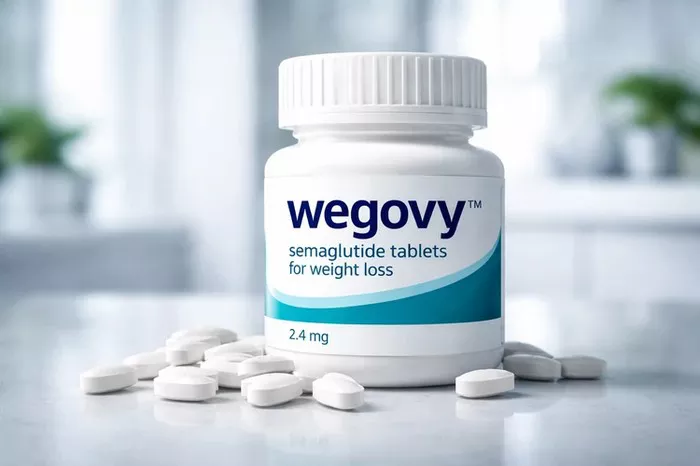
Weight loss treatment may soon become easier to manage, at least in theory. The US Food and Drug Administration has approved Wegovy in pill form, offering a once-daily oral alternative to the widely used weekly injection. While the medication is not yet available in the UAE, the approval marks a significant shift in how obesity and chronic weight conditions could be treated in the future.
To understand what the new pill means for patients—and what it does not—UAE-based specialists Dr Yousef Said, Medical Director at GluCare.Health by meta[bolic], and Dr Ali El Houni, Consultant Endocrinologist at Medcare Royal Speciality Hospital, explain the science, safety considerations, and real-world implications behind oral Wegovy.
Same medication, different delivery
Both the injectable and oral versions of Wegovy contain semaglutide, a GLP-1 receptor agonist that suppresses appetite, increases satiety, and improves blood sugar control.
“The key difference is not what the drug does, but how it enters the body,” Dr Said explains. “The injection is absorbed gradually under the skin, while the pill must pass through the stomach and intestines. This means timing and precision are critical—the pill must be taken exactly as instructed, on an empty stomach, to be effective.”
While both forms are designed for long-term weight management, doctors stress that adherence is particularly important with the daily pill, as inconsistent use can reduce its effectiveness.
What the science shows
The FDA’s decision was supported by results from the Phase 3 OASIS-4 trial, published in The New England Journal of Medicine. The study evaluated a once-daily 25 mg oral dose of semaglutide in adults with obesity or overweight and at least one weight-related condition.
Over 64 weeks, participants who adhered closely to the treatment and lifestyle guidance lost an average of 16.6 per cent of their body weight, compared with 2.7 per cent in the placebo group. Around one in three participants lost 20 per cent or more of their body weight—results comparable to those seen with weekly injectable Wegovy.
Even when accounting for all participants, including those with imperfect adherence, the oral medication still produced clinically meaningful weight loss. Researchers also observed improvements in physical function and cardiometabolic risk factors, reinforcing the pill’s potential as an effective weight-management option.
Pill versus injection: Is one better?
When taken correctly, the pill and injection appear similarly effective. “Most patients can expect weight loss in the range of 10 to 15 per cent—or more—over about a year,” says Dr Said.
Dr El Houni agrees, noting that “at the maximum maintenance doses approved for weight loss, the efficacy of the oral and injectable forms is very similar.”
Ultimately, doctors say the best option is the one a patient can maintain consistently. Some prefer a weekly injection, while others find a daily pill easier to incorporate into their routine.
Side effects and safety concerns
Both forms of Wegovy share similar side effects, particularly during the early stages of treatment or dose increases. These include nausea, bloating, constipation, diarrhoea, and heartburn.
“The pill can be slightly harsher on the stomach initially,” Dr Said notes, “but these symptoms usually improve as the body adapts.”
Wegovy is not suitable for everyone. It should not be used during pregnancy, and people with certain rare thyroid cancers are advised to avoid it. Persistent vomiting, severe abdominal pain, or signs of dehydration require immediate medical attention.
Muscle loss: An overlooked risk
One of the most important risks doctors highlight is muscle loss. Dr Said warns that GLP-1 medications used without proper lifestyle support can accelerate sarcopenia, the age-related loss of muscle mass.
“After age 50, muscle loss typically occurs at 1–2 per cent per year,” he explains. “But poorly managed weight loss using GLP-1 medications can theoretically accelerate decades of muscle loss in a single cycle.”
To prevent this, doctors emphasise that BMI alone is not enough. Monitoring body composition—fat, muscle, and lean mass—using tools such as DEXA scans or ultrasound is essential, alongside adequate protein intake and resistance training.
Why medical supervision matters
In the UAE, many patients seeking weight-loss treatment already have metabolic conditions such as diabetes or insulin resistance. Before prescribing Wegovy, clinicians assess blood sugar levels, liver and kidney function, medication history, and overall metabolic health.
“Regular follow-ups are crucial, especially in the first few months,” Dr Said explains. “We monitor weight trends, hydration, side effects, and muscle mass to ensure weight loss is safe and sustainable.”
Wearable devices and digital tracking tools can further support treatment by monitoring sleep, activity, stress, and blood glucose, allowing for real-time adjustments to diet, exercise, and medication.
Who may benefit most from the pill?
The oral version of Wegovy may appeal particularly to patients who are uncomfortable with injections, travel frequently, or prefer a more discreet option. Unlike injections, the pill does not require refrigeration, making it more convenient for some lifestyles.
However, both doctors caution against viewing the medication as a quick fix. “Wegovy treats obesity as a chronic medical condition,” Dr Said says. “It supports healthier habits, but it does not replace them.”
Lifestyle still does the heavy lifting
Experts agree that medication alone is not enough. Long-term success depends on nutrition, physical activity, sleep, and regular medical follow-up.
“The medication helps control appetite,” Dr Said explains, “but what patients eat, how they move, and how consistently they engage with care ultimately determines outcomes.”
Recent regional data suggest that when semaglutide is used within a structured care model—including strength training and dietary support—muscle loss can be significantly reduced compared with earlier studies.
The bottom line
Wegovy in pill form represents a major advance in weight-loss treatment, offering patients a new, effective alternative to injections. But doctors stress it is not a magic solution.
“When used responsibly, with proper prescribing and lifestyle support, it can help patients lose weight safely, preserve muscle, and improve long-term metabolic health,” Dr El Houni says.
For patients who have struggled with weight for years, the pill could be a game-changer—but only under close medical supervision.
