
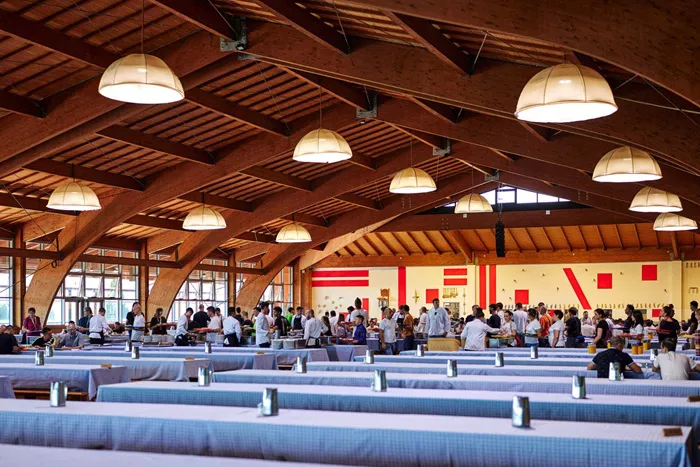
San Patrignano, one of Europe’s largest and most renowned rehabilitation centers, offers a unique approach to addiction recovery. Nestled in the rolling hills of northern Italy, the center’s dining room overlooks picturesque landscapes, a fitting backdrop for the journey of recovery that Michael, a 20-year-old from Detroit, is undergoing.
Michael arrived at San Patrignano in February, following a series of unsuccessful attempts at addiction treatment back home. Despite relapsing after each stint, he says the center’s model, which focuses on community over conventional rehabilitation, is what drew him in. “I wouldn’t even call it ‘rehab,’” he explains. “It’s really a community.”
While therapeutic communities have been around for decades, San Patrignano stands out for its holistic approach. The 700-acre campus in Italy’s Emilia Romagna region is more than just a rehab; it’s a self-sustaining village. With businesses such as bakeries, vineyards, and workshops, as well as an animal shelter and hospital, the center fosters both recovery and skill-building. San Patrignano’s unique blend of community and vocational therapy has earned it international recognition.
RFK Jr., the U.S. presidential candidate and advocate for addiction recovery, has taken an interest in the center’s model. Having battled heroin addiction himself, Kennedy has called for more therapeutic programs like San Patrignano in the U.S. to tackle the opioid crisis. “I’m gonna build these rehab centers all over the country — these farms, healing camps — where people can go, where our American children can go and find themselves again,” he said in a recent interview.
However, critics question San Patrignano’s methods, particularly its non-medical approach to treatment. Some argue that the program’s reliance on work therapy and peer support, without traditional counseling or addiction medications, does not align with the latest addiction treatment practices. The center also has a history of allegations regarding abuse and exploitation, though leaders claim to have addressed past issues.
Michael acknowledges these controversies but feels that traditional American rehab centers failed him. He had experienced subpar treatment at U.S. facilities, where relapse was common and follow-up care was minimal. “The work I’m doing here, that’s the most important part of the treatment,” he says. “It gives you the time and space to focus on yourself.”
The Program at San Patrignano
San Patrignano’s program, which is free to admitted residents, is largely run by peers in recovery. It focuses on community engagement, with each resident assigned to a work role on the campus, which includes everything from cooking in the kitchen to managing the vineyard. Work is seen as a vital part of the therapeutic process, encouraging accountability and self-worth.
Participants are expected to stay for at least two years, and the rules are strict. Internet and cell phones are prohibited for the first year, and residents can only communicate with their families via letters. The idea is to remove external distractions and immerse residents in the community. Michael, for example, works in hospitality, serving meals and maintaining the communal spaces.
In addition to its rehabilitation efforts, San Patrignano operates businesses that generate income, including a winery that produces 400,000 bottles of wine annually. Other ventures include a cheese-making facility, a hand-weaving workshop, and even a luxury fashion partnership. Despite working long hours, Michael says he feels his contributions matter and helps pay for his living expenses.
But not all residents find the program beneficial. Michele Bertoni, who left after two weeks, said the focus on work left little room for addressing his mental health needs. “If you start talking about your problems, you’ll waste your time,” Bertoni said, adding that he felt his personal struggles were overlooked.
The critics of San Patrignano’s approach also raise concerns about the absence of addiction medications like methadone or buprenorphine. These drugs are considered by many experts as the “gold standard” in addiction treatment because they help prevent withdrawal symptoms and cravings. However, San Patrignano’s medical director, Dr. Antonio Boschini, argues that addiction is a “soul disease” that requires a more immersive, holistic recovery experience than what medication alone can provide.
“The therapy here is about teaching people how to engage with the world without substances,” said Boschini, a former resident who has been sober for decades.
Concerns about Exploitation and Effectiveness
Despite its successes, San Patrignano is not without its controversies. Critics worry that the focus on unpaid work may border on exploitation, particularly in the context of the U.S. addiction treatment landscape, which is moving toward more punitive measures. Professor Leo Beletsky, an expert in health law, cautioned that without proper safeguards, large therapeutic communities could devolve into forced labor camps.
Research on the effectiveness of therapeutic communities is mixed. While some studies suggest that long-term treatment in a structured environment leads to better outcomes, critics argue that the model isn’t scalable and doesn’t take full advantage of newer, evidence-based treatments. In fact, some studies have found no clear advantage for therapeutic communities compared to other residential treatment options.
Nonetheless, San Patrignano reports high success rates, with a study showing that 78% of those who completed the program remained drug-free for at least two years. Proponents of the model argue that the sense of community, structure, and purpose is key to lasting recovery.
For Michael, the program has provided the stability and community support he needed. After seven months, he feels clearer-headed, more engaged with others, and more hopeful about his future. “I’m starting to see the benefits, the changes I’ve made,” he says.
In the end, whether San Patrignano’s model can be replicated successfully in the U.S. remains a point of debate. But for Michael, the program has given him something that he didn’t find in American rehabs — a sense of belonging, accountability, and a community committed to his recovery.
Related topic:
