
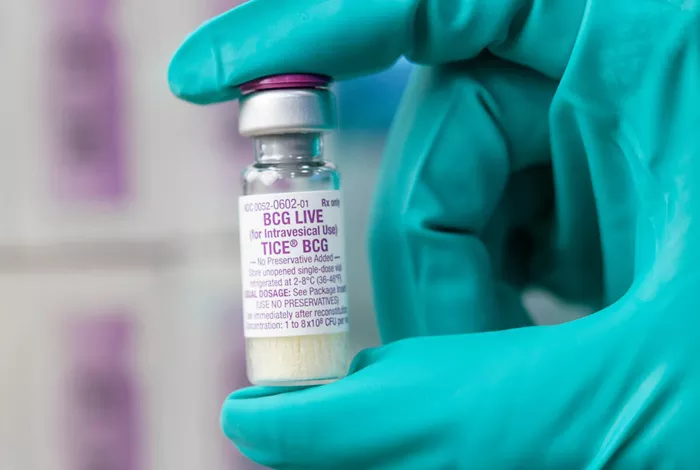
For decades, the Bacillus Calmette-Guérin (BCG) vaccine has been a standard, low-cost immunotherapy for non-muscle-invasive bladder cancer (NMIBC). However, the century-old vaccine alone does not help all patients achieve remission.
Recently, the U.S. Food and Drug Administration approved ANKTIVA® in combination with BCG for patients with BCG-unresponsive NMIBC with carcinoma in situ (CIS), with or without papillary tumors.
A study published in the Journal of Urology on January 1, 2026, shows that this combination provides strong efficacy at 12 and 36 months. Researchers reported high disease-free survival, disease-specific survival, long-term progression-free survival, and notable avoidance of cystectomy in patients with BCG-unresponsive high-grade papillary-only NMIBC.
The therapy was also well tolerated, with only 3% of patients experiencing grade 3 treatment-related adverse events and no grade 4 or 5 events.
“Patients with BCG-unresponsive papillary-only NMIBC have limited treatment options, with cystectomy often seen as the definitive solution,” said lead author Sam S. Chang, M.D., Professor of Urology and Chief Surgical Officer at Vanderbilt Ingram Cancer Center. “Extending progression-free survival, preserving the bladder, and improving disease-specific survival are meaningful goals for chemotherapy-free immunotherapy.”
Dr. Chang added, “Our findings show that ANKTIVA plus BCG offers a novel and effective treatment option for these patients.”
ANKTIVA is currently approved in the U.S. and the U.K., and holds Conditional Marketing Authorization in the European Union for the same patient population.
“The QUILT-3.032 study demonstrates long-term cystectomy avoidance, sustained prevention of progression to muscle-invasive disease, and 96% bladder cancer-specific survival at three years,” said Dr. Patrick Soon-Shiong, Founder and Executive Chairman of ImmunityBio. “These results suggest that ANKTIVA plus BCG meets a critical unmet need for patients with papillary disease alone who might otherwise face radical bladder removal after BCG failure.”
Related topic:
