
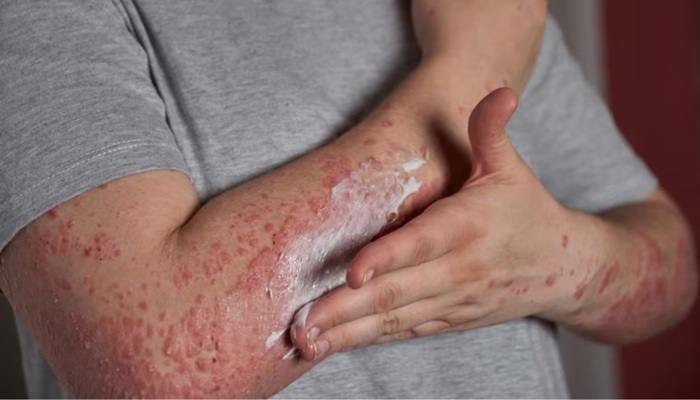
A new genetic study suggests that psoriasis may directly increase the risk of depression, offering fresh insight into a long-debated question in dermatology and mental health. Using Mendelian randomization (MR) analysis of large European genome-wide association study (GWAS) datasets, researchers found that genetic susceptibility to psoriasis raises the likelihood of depression by roughly one-third (OR: 1.348, 95% CI: 1.141–1.592; P = .004).
The effect remained robust across multiple analyses, including tests for reverse causality, indicating a likely causal relationship rather than one driven solely by shared environmental factors or disease burden, according to the study published in International Journal of Clinical Practice.
Genetic Links May Precede Symptoms
Clinicians have long observed that patients with psoriasis often experience mood disturbances even when skin symptoms are controlled. By anchoring this connection in inherited risk, the study suggests that the interplay between psoriasis and depression may begin well before clinical onset, potentially through shared immune pathways.
Exploring the Genetic Basis
Researchers from the Second Hospital of Hebei Medical University in China noted that previous observational studies consistently documented higher rates of depressive symptoms, major depressive disorder, and suicidality among people with psoriasis. However, teasing apart causality has been challenging due to the influence of psychosocial stress, systemic inflammation, and comorbid conditions. Depression and stress have also been suggested as risk factors for psoriasis onset.
Mendelian randomization offers a solution. By using genetic variants fixed at conception, MR avoids many confounders present in observational research. If psoriasis-linked genes also increase depression risk, a causal relationship is more likely.
Study Design and Findings
The team analyzed GWAS data from 3,871 psoriasis cases and over 333,000 controls in the UK Biobank, alongside an independent dataset of more than 113,000 depression cases. Thirteen genome-wide significant single nucleotide polymorphisms (SNPs) were used as instrumental variables, meeting criteria for strength, independence, and minimal confounding.
Across analyses, genetic predisposition to psoriasis increased depression risk by 30–35%. Colocalization analysis identified SNP rs12189871 near HLA-C and HLA-B as a shared causal signal. Regulatory effects on HLA-region genes, which influence CD8+ T-cell activation, cytokine production, and inflammatory signaling, may provide a biological link between psoriatic inflammation and mood regulation.
Clinical Implications
The findings underscore the complex interaction between inflammation and mood. Many patients report stress that can worsen skin symptoms, while depression has been linked to variable treatment response. The MR evidence suggests that underlying genetic architecture may contribute to both conditions, rather than disease burden alone.
The researchers advise dermatologists and primary care physicians to incorporate routine depression screening into psoriasis management, emphasizing that early detection could improve both mental health and skin outcomes.
Limitations and Future Directions
The study’s findings are limited by its focus on European populations and the broad definition of depression, which prevents subtype-specific conclusions. Functional studies are needed to validate the role of rs12189871. Future research aims to explore HLA-linked inflammatory pathways in mood regulation, extend analyses to diverse populations, and determine whether treating depression may influence psoriasis progression.
Related topic:
