
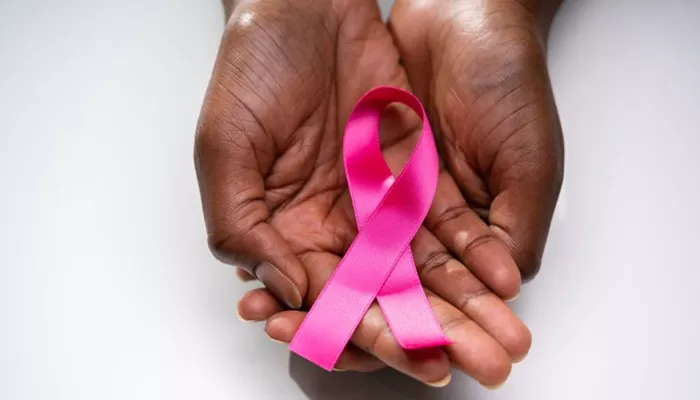
During Breast Cancer Awareness Month, advocates emphasized the critical importance of regular screenings and community education to promote early detection and empower women to make informed healthcare decisions.
Breast cancer disproportionately affects Black women. According to the American Cancer Society, it accounts for 34 percent of all cancers diagnosed in Black women. They are 38 percent more likely to die from the disease than White women, despite being 5 percent less likely to be diagnosed. In 2022, breast cancer was the leading cause of cancer death among Black women.
For survivors like Valarie Traynham, these statistics underscore the urgent need for awareness and self-advocacy.
“As a Black woman, I’ve learned that sometimes the healthcare system doesn’t ask the deeper questions when it comes to us,” Traynham said. “I kept going back to convenient care for the same issues, and each time they treated the infections but never asked why they kept happening.”
Traynham said systemic barriers, delayed diagnoses, and the tendency of doctors to dismiss symptoms contribute to worse outcomes for Black women. Generational mistrust in healthcare often compounds the problem.
Her own journey illustrates this. Frustrated by doctors downplaying her symptoms, Traynham pushed for answers and discovered she had both myeloma, a blood cancer, and breast cancer.
“When I heard I had breast cancer, it hit me hard,” she said. “I was just coming out of active treatment for myeloma, so this diagnosis felt like a gut punch. I felt like I couldn’t catch a break.”
Although her myeloma was detected at a more aggressive stage, Traynham caught her breast cancer early, providing more treatment options and a higher chance of survival.
Research supports the value of regular screening. A study published in the Journal of Clinical Oncology analyzed cancer registry data from 8,145 patients diagnosed between 2004 and 2019. It found that late-stage breast cancer diagnoses were more common among women with less frequent screenings. Only 9 percent of women who had annual screenings were diagnosed at a late stage, compared to 14 percent of women with biennial screenings and 19 percent of those screened intermittently. The trend persisted regardless of age, race, or menopausal status.
Traynham considers herself fortunate but acknowledges the challenges of treatment. She described chemotherapy for breast cancer as harsher than her treatment for myeloma.
Now, she shares her hard-earned lessons with others.
“I learned that if something seems off, you shouldn’t wait or brush it off—get it checked,” Traynham said. “Awareness, vigilance, and action can save lives.”
Related topic:
