
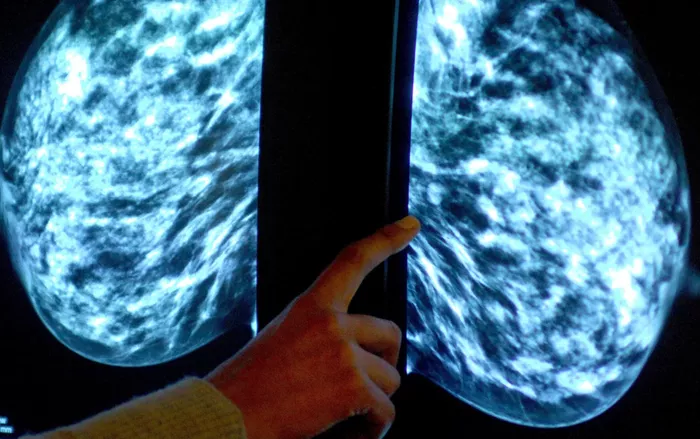
A new artificial intelligence benchmark aims to improve the accuracy and interpretability of breast cancer screening by integrating mammogram imaging with visual question answering (VQA).
Breast cancer remains one of the most common cancers among women, and timely detection is central to improving outcomes. While mammography is the standard screening tool, interpretation challenges and variability among radiologists can lead to false positives and missed cases.
The new benchmark addresses these limitations by enabling AI models to process both images and diagnostic questions, offering more detailed and transparent assessments than traditional classification systems.
The dataset behind the benchmark includes a large set of mammograms paired with questions and validated answers from expert radiologists. This multimodal structure allows AI models to identify lesion types, estimate malignancy probability, or assess breast density in response to targeted queries. The design supports more granular and interactive analysis, mirroring the reasoning process used in clinical decision-making.
Technically, the benchmark relies on deep learning architectures that combine image feature extraction with natural language understanding. Transformer-based attention mechanisms help the system align visual cues with the meaning of each question, improving accuracy and explainability. This is a key requirement for clinical adoption, where opaque “black box” outputs are often unacceptable.
The researchers emphasize that the benchmark reflects close collaboration between AI developers and radiologists. Human experts created the annotations and clinical questions, ensuring that model performance aligns with real diagnostic needs. The authors also note that the framework’s structure could be adapted for other imaging domains, including CT-based lung nodule evaluation or retinal disease screening.
Challenges remain. AI models must generalize across diverse imaging equipment, patient populations, and clinical settings. Regulatory and ethical considerations—such as bias monitoring and transparent validation—will also shape future deployment. The team identifies expansion to multi-institutional datasets, more complex clinical dialogue, and integration of patient history as key directions for future research.
By releasing the benchmark openly, the authors aim to accelerate the development of clinically aligned AI tools. If widely adopted, mammogram VQA systems may help reduce diagnostic errors, personalize screening strategies, and support clearer communication between clinicians and patients.
Related topics
