
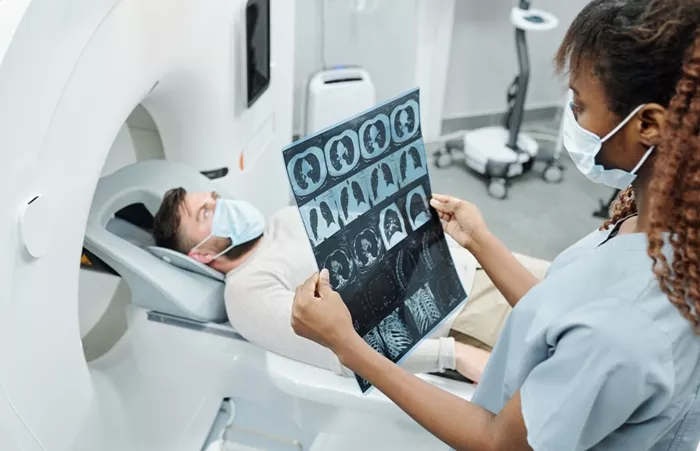
Lung cancer kills more Americans than breast, colon, and prostate cancers combined. This is especially concerning in South Florida, where about 70 percent of the population is Hispanic. According to the American Lung Association’s State of Lung Cancer 2025 report, Hispanics there are less likely to be diagnosed early and more likely to miss out on treatment than white patients.
There is positive news. Baptist Health Miami Cancer Institute is helping change this by promoting low-dose CT screenings that are quick and noninvasive. The Institute partners with the LUNGevity Foundation, a national group supporting lung cancer patients, caregivers, survivors, and families. Together, they are screening more people to find cancer at earlier, more treatable stages.
“We are working to change lung cancer outcomes through community outreach, education, and raising awareness about screening,” says Dr. Manmeet Ahluwalia, chief of medical oncology at Baptist Health Cancer Care.
Project ASCENT Increases Screening Rates
Since 2022, screenings at Miami Cancer Institute have grown by 130 percent. This success was highlighted at the International Association for the Study of Lung Cancer World Conference in Barcelona in September.
Dr. Ahluwalia explains, “We created a culturally sensitive patient navigation program with educational materials in both Spanish and English.” The success of Project ASCENT has earned a grant from the American Cancer Society. This funding will help the Institute work more closely with primary care doctors to ensure their eligible patients get screened.
The American Cancer Society reports that only 15 to 20 percent of people who qualify for low-dose CT screening actually receive it. Among Hispanics in Florida, the percentage is even lower.
“By giving people knowledge about their lung cancer risks and the benefits of early detection, we can start saving more lives,” Dr. Ahluwalia says.
Who Should Get Screened?
Tobacco use is still the main risk factor for lung cancer. The U.S. Preventive Services Task Force recommends yearly low-dose CT lung cancer scans for people who:
- Are between 50 and 80 years old
- Have smoked at least a pack a day for 20 years (or equivalent)
- Currently smoke or quit within the past 15 years
Leading Research to Improve Lung Cancer Care
Besides increasing screening access, Miami Cancer Institute leads cutting-edge research to improve treatments. Some key clinical trials include:
RADIATE-LM Trial: Compares two types of radiation therapy to see which improves survival for breast cancer or non-small cell lung cancer patients with brain metastases.
COPERNICUS Trial: Tests whether a new drug combo, given as a shot, works as a first- or second-line treatment for patients with EGFR-mutated advanced lung cancer.
Baptist Health’s combined focus on early detection and research aims to improve lung cancer outcomes, especially in underserved communities.
Related topics
Study Finds New Cancer Test Guidelines Miss Majority of Lung Cases
