
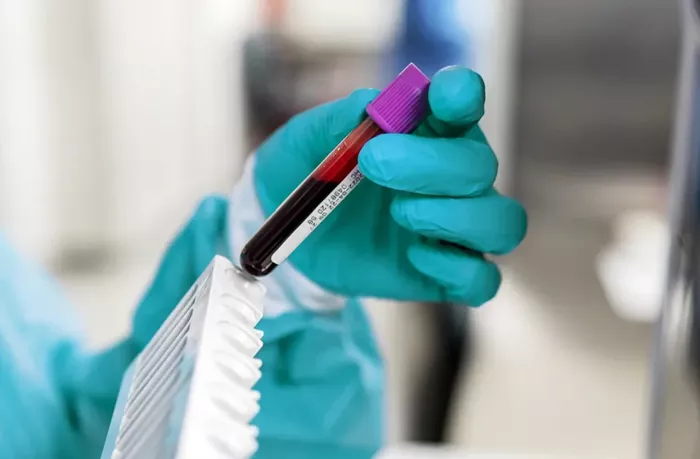
Progress in reducing cancer deaths worldwide remains slow, but a new blood test has created hope. This test might one day help doctors catch cancers earlier, when treatments have the best chance to save lives.
Called the Galleri test, it was developed by the US company Grail. Early trial results have been called “exciting” by researchers, drawing global attention.
According to a recent press release, the Galleri test can detect signals from 50 different types of cancer. It correctly identified cancer in 62 percent of people who tested positive. It was also very good at ruling out cancer, with a 99.6 percent accuracy rate for people without the disease. These numbers sound like a big breakthrough.
But it is important to understand what these numbers really mean before getting too optimistic. Tests that look promising at first do not always work as well in real life.
The Pathfinder 2 trial tested 23,161 people over 50 years old from the US and Canada who had no previous cancer diagnosis. Of the 216 participants who tested positive, 133 actually had cancer. This means the chance that a positive test shows real cancer, called the “positive predictive value” (PPV), was 62 percent.
However, this also means that 38 percent of positive results were false alarms. False positives can cause worry and lead to more medical tests.
The test’s specificity, or how often it correctly gives a negative result to people without cancer, was high at 99.6 percent. Yet if every UK adult over 50—more than 26 million people—were tested, this false positive rate could produce over 100,000 false alarms.
The test’s sensitivity, the measure of how many actual cancers it finds, was much lower at 40.4 percent. This means the test missed about 60 percent of cancers that appeared within a year after testing.
This lower sensitivity is an important limitation. It risks giving people false reassurance if their results are negative, which could delay a cancer diagnosis.
Experts point out that these test accuracy numbers are estimates and can be less reliable outside of controlled trials. Real-world results may vary and could be lower.
The Galleri test could become a useful tool added to existing cancer screenings, but patients and doctors must be careful not to treat a negative test as a guarantee of no cancer.
Additionally, the test costs nearly $950 in the US and there is yet no proof it lowers cancer death rates when used widely.
In summary, the early results are encouraging but the excitement should be cautious. The Galleri cancer blood test is a step forward but not a complete solution on its own.
Related topics
Study Finds New Cancer Test Guidelines Miss Majority of Lung Cases
Trump Eyes Two-Year Subsidy Boost for ACA Health Insurance Plans
Is Dental Insurance Worth the Cost? Many Patients Remain Unconvinced
