
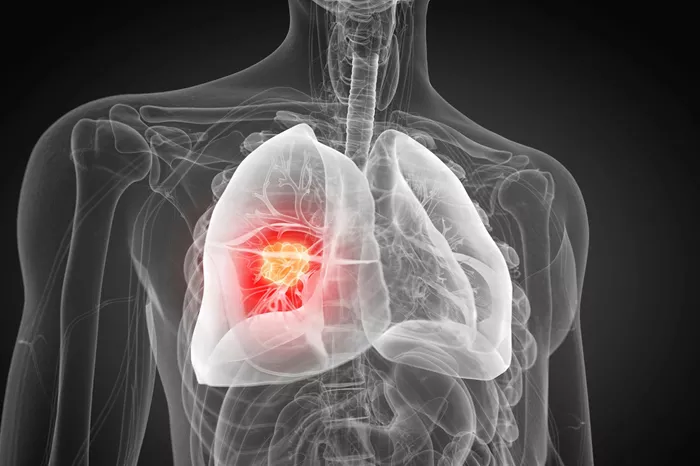
Lung cancer in women often appears later and behaves differently than it does in men. Many women receive a diagnosis only after the disease has already spread. They also tend to develop lung cancer at a younger age, be nonsmokers, and have tumors that grow slowly and remain unnoticed for longer.
Although men and women share many of the same symptoms, lung cancer can progress quietly. Some people have no symptoms at all, even in advanced stages.
Common Symptoms of Lung Cancer in Women
Lung cancer remains the leading cause of cancer death among women in the United States. It claims more lives than breast, ovarian, and cervical cancers combined. Recognizing early warning signs is essential.
According to Maria A. Velez, MD, from the UCLA David Geffen School of Medicine, the most frequent symptoms in women reflect those seen in the general population.
Common symptoms include:
- A persistent or worsening cough
- Shortness of breath and hoarseness
- Chest pain
- Coughing up blood
- Unintentional weight loss
- Fatigue
Symptoms of Metastatic Lung Cancer in Women
Because many women are diagnosed at later stages, symptoms caused by cancer spread are more common. These vary depending on the organ affected.
Metastatic symptoms may include:
Bone metastasis: bone pain, back pain, hip pain, and fractures
Brain metastasis: headaches, vision changes, weakness, confusion, seizures, vertigo, or stroke-like symptoms
Liver metastasis: jaundice and abdominal pain
Less Common Symptoms
Dennis Lowenthal, MD, of Atlantic Health System, notes that tumors in the upper part of the lung may cause shoulder pain or pain radiating down the arm, though this is rare.
Other less common symptoms include:
Loss of appetite
Swollen glands in the neck
Swelling of the head or neck due to impaired blood flow
Types of Lung Cancer
There are two main categories of lung cancer:
Small-cell lung cancer (SCLC) and non-small cell lung cancer (NSCLC). Each has subtypes.
SCLC
SCLC is strongly linked to tobacco smoking. Under a microscope, it appears as either:
Small-cell carcinoma
Combined small-cell carcinoma
These distinctions help guide research and treatment.
NSCLC
NSCLC accounts for up to 90% of lung cancer cases. It usually grows more slowly and may not cause symptoms until it becomes advanced.
The three main NSCLC subtypes are:
- Adenocarcinoma
- Large-cell undifferentiated carcinoma
- Squamous cell lung cancer
Adenocarcinoma is the most common and the subtype seen more often in women and in nonsmokers. Because it usually starts in the outer lungs, early coughing symptoms may be absent. As a result, women often present with symptoms caused by cancer spread rather than symptoms from the lung itself.
Large-cell undifferentiated carcinoma can arise anywhere in the lung and often spreads quickly. It is associated with smoking.
Squamous cell carcinoma begins near the central airways and is more common in men.
How Lung Cancer Differs in Women
While symptoms are similar between genders, the timing of diagnosis, type of cancer, and underlying biology often differ.
Women are more likely to:
- Develop adenocarcinoma
- Be never-smokers
- Carry tumors with genetic mutations that respond to targeted therapy
These “actionable mutations” allow doctors to prescribe treatments that slow tumor growth. They are not curative but can be effective for long periods. These biologic differences may also contribute to better survival rates for women compared with men.
Early Screening and Detection
Current screening guidelines do not include sex-specific recommendations. Screening is advised only for adults at high risk based on smoking history and age. Annual screening is recommended for:
Current smokers or those who quit within the past 15 years
People who smoked at least one pack per day for 20 years
Adults ages 50 to 80
However, many women with lung cancer do not meet these criteria because they are younger and have never smoked. Experts hope future guidelines may be adjusted to better reflect these patterns.
When to See a Doctor
People should consult a doctor if they have any persistent or unexplained symptoms such as:
- Long-lasting cough
- Shortness of breath
- Coughing up blood
Any symptom that does not improve should be evaluated by a primary care provider.
Conclusion
The symptoms of lung cancer are similar in men and women, but women are often diagnosed later, when the disease has already progressed. They are more likely to be young, nonsmoking, and to develop adenocarcinoma.
Common symptoms include coughing, breathlessness, chest pain, fatigue, and weight loss. Symptoms from metastasis depend on where the cancer spreads. Current screening guidelines do not reflect sex-based differences, so awareness of symptoms is crucial. Anyone with concerns about lung health should speak with a healthcare provider.
Related topics
U.S. Lung Cancer Screening Rates Lag Despite Declines in Smoking
Lung Cancer Screening Rates Rise with New Digital Health Intervention
New National Guidance Helps GPs Advise Women on Breast Density and Cancer Risk
