
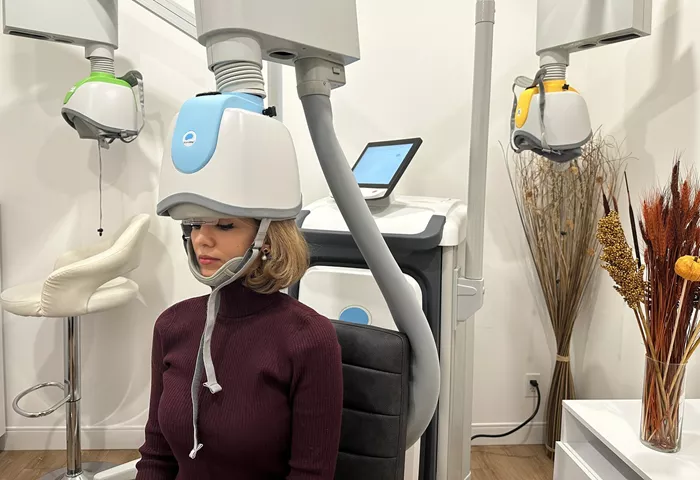
The treatment of depression has long relied on combinations of therapeutic approaches. However, as research and innovation advance, new modalities continue to reshape clinical practice. Among the most promising developments is the combination of ketamine—including its FDA-approved intranasal form, esketamine (Spravato)—and Deep Transcranial Magnetic Stimulation (dTMS), an FDA-cleared noninvasive brain-stimulation therapy.
Emerging clinical evidence suggests that when used together, these two treatments may enhance outcomes for patients with major depressive disorder (MDD) and treatment-resistant depression (TRD), offering new hope to those who have not responded to conventional therapies.
How Ketamine and Deep TMS Work Together
Traditional antidepressants, such as selective serotonin reuptake inhibitors (SSRIs), primarily target serotonin regulation in the brain and often require weeks before showing noticeable improvement. In contrast, ketamine works through the brain’s glutamate pathways, producing rapid neurochemical changes that can alleviate depressive symptoms within hours.
Because of this rapid onset, ketamine is particularly valuable in acute situations, such as for patients experiencing suicidal thoughts. However, the effects tend to be short-lived, necessitating repeated infusions or doses.
This is where dTMS offers a complementary advantage. By delivering targeted magnetic pulses to brain circuits involved in mood regulation, dTMS promotes longer-term neuroplastic changes.
While the benefits may take several sessions to emerge, they are often more durable, with some patients maintaining remission for months or even years.
Together, ketamine provides rapid relief, while dTMS supports sustained recovery—a potential synergy that could transform the landscape of depression care.
Why Traditional Antidepressants Aren’t Enough
Despite decades of progress in mental health awareness and diagnosis, depression remains one of the most common mental illnesses in the United States. Approximately 30% of patients experience treatment-resistant depression, indicating that medication alone may be insufficient.
This shortfall has far-reaching consequences. Beyond personal suffering, depression imposes a massive societal burden, contributing to lost productivity and increased healthcare costs. Researchers estimate that 12 billion workdays are lost each year due to depression and anxiety—amounting to nearly $1 trillion in economic losses annually.
With the global prevalence of depression rising by more than 60% over the past decade, reliance on traditional pharmacological approaches is no longer sustainable.
Barriers to Personalized Mental Health Care
A major obstacle to progress lies in limited access to advanced treatments. Despite strong clinical evidence supporting therapies like dTMS and ketamine for TRD, insurance coverage remains inconsistent.
Many insurers require a “fail-first” policy, compelling patients to try—and fail—multiple standard antidepressants before authorizing coverage for more advanced options. This approach can be dangerous, particularly for patients at high risk of suicidal ideation, who cannot afford long delays in receiving effective care.
The same access issues affect ketamine therapy, which, despite demonstrating rapid and meaningful antidepressant effects, is still not widely covered. Even when one treatment is approved, coverage for a combined protocol—ketamine with dTMS—is rarely provided. As a result, patients often find themselves referred to facilities that offer neither, representing a critical gap in care delivery.
The Next Frontier in Depression Treatment
The integration of ketamine therapy with dTMS symbolizes a new neuro-modulated era in psychiatry—one focused on optimizing both the speed and durability of antidepressant effects. Ongoing clinical research is shifting from the question of whether depression can be treated to how it can be treated more effectively and equitably.
However, scientific progress without equitable access remains an incomplete victory. Healthcare payment models and policy frameworks have not kept pace with medical innovation, leaving too many patients behind.
To truly advance the field, healthcare systems must align science, policy, and clinical practice, ensuring that transformative therapies like ketamine and dTMS are available to those who need them most—when they need them.
Related topics
