
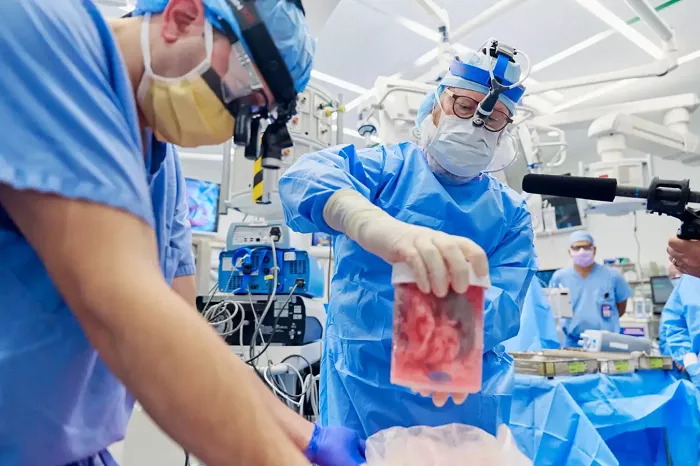
NYU Langone Health has initiated a landmark clinical trial testing the safety and efficacy of gene-edited pig kidney transplants in patients with end-stage renal disease. The EXPAND study (NCT06878560), sponsored by United Therapeutics Corporation, represents a significant advancement in xenotransplantation—the process of transplanting animal organs into humans. This research investigates UKidney, an investigational organ from pigs with 10 genetic modifications designed to enhance compatibility with human recipients.
Genetic Engineering and Scientific Innovation
The experimental UKidney originates from pigs with precisely engineered genomes:
- Six human genes addedto improve acceptance by human immune systems
- Four pig genes inactivatedto reduce rejection risks and moderate organ growth
This genetic configuration represents the most sophisticated xenotransplant approach to date. “This achievement marks a transformative moment in transplant medicine,” said Dr. Robert Montgomery, director of the NYU Langone Transplant Institute, who leads the trial and performed the first-ever gene-edited pig-to-human transplant in 2021.
Clinical Experience and Progression
The current trial builds upon NYU Langone’s pioneering xenotransplantation program, which includes nine previous procedures:
- Six xenotransplants in decedents, including four kidney and two heart transplants
- The world’s first gene-edited pig-to-human transplant in September 2021
- The first combined heart pump and pig kidney transplant in April 2024
While previous recipients faced challenges including one hospice admission and one graft removal due to infection, each procedure has provided crucial insights that inform the current trial design.
Trial Design and Regulatory Pathway
The EXPAND study employs an innovative “phase-free” design that combines traditional Phase 1, 2, and 3 objectives into a single continuous trial. This approach accelerates the evaluation process while maintaining scientific rigor. The trial includes:
- Initial cohort of six transplants across two medical centers
- 12-week waiting period between procedures for safety monitoring
- 24-week post-transplant follow-up assessing efficacy and safety endpoints
- Lifetime surveillance for zoonotic infections and organ function
Success could support a Biologics License Application (BLA) seeking FDA approval for widespread clinical use.
Patient Selection and Eligibility Criteria
The trial enrolls carefully selected participants meeting specific criteria:
- Age 55-70 with end-stage kidney disease
- Minimum six months on hemodialysis
- No need for multi-organ transplantation
- Absence of severe comorbidities (advanced cardiovascular disease, uncontrolled diabetes)
- Demonstrated medical compliance history
Participants undergo cross-match testing to assess immunological compatibility with the UKidney.
Future Implications and Expansion Plans
Following data review from the first six transplants, United Therapeutics plans to amend the study protocol to increase sample size and involve additional transplant centers. “The EXPAND study offers new hope for thousands of Americans currently on kidney transplant waitlists,” noted Dr. Montgomery. This research represents a crucial step toward addressing the critical organ shortage crisis, where approximately 100,000 Americans await kidney transplants with limited donor availability.
Related topics:
