
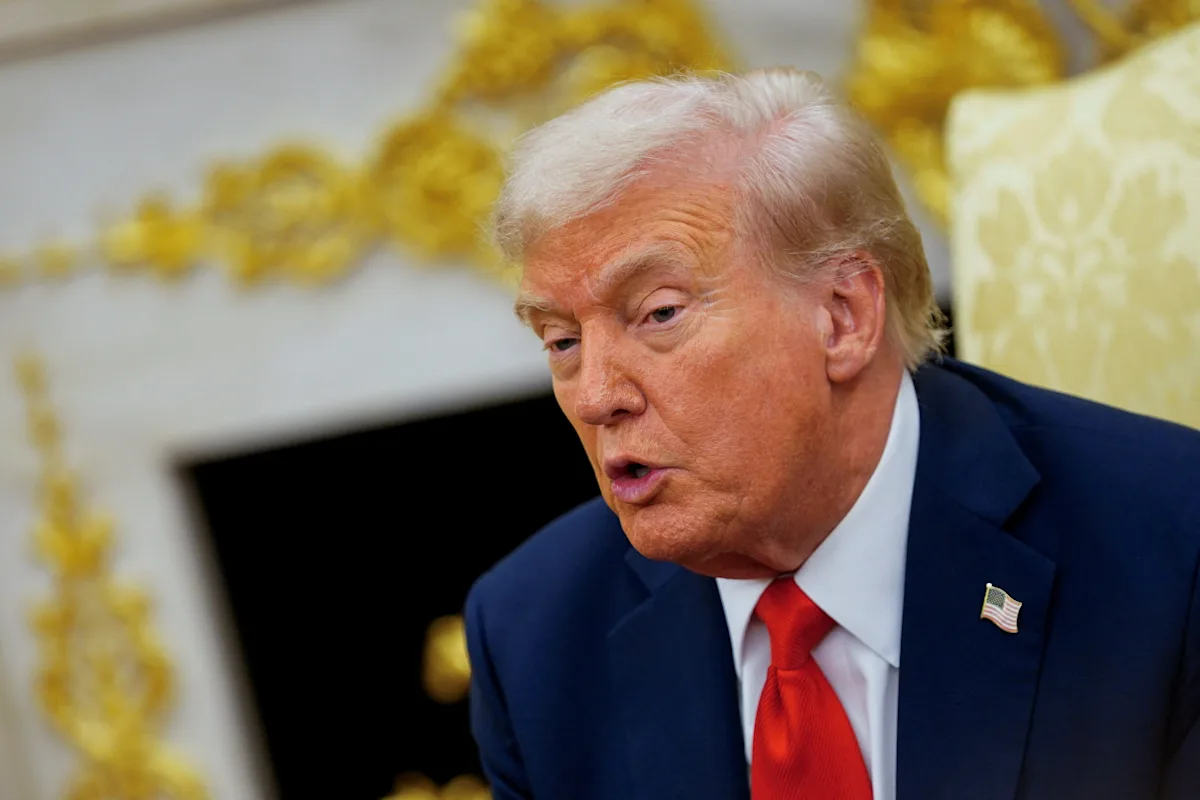
President Donald Trump has confirmed that he recently underwent a magnetic resonance imaging (MRI) scan at the Walter Reed National Military Medical Center, marking his second medical visit of the year. The 79-year-old president made the announcement while speaking to reporters aboard Air Force One on Monday, assuring the public that the results were, in his words, “perfect.”
The confirmation has reignited public discussion and media attention surrounding Trump’s health, especially as he continues to remain one of the oldest presidents in American history. CNN and other outlets have reported increased interest in the frequency of his medical evaluations and the implications for his overall condition.
Details of the MRI and Trump’s Statement
When questioned by journalists about his visit to Walter Reed, Trump responded confidently: “I did. I got an MRI. It was perfect,” he said. “I gave you the full results. We had an MRI, and the machine, you know, the whole thing, and it was perfect.”
Although the president described the scan results as flawless, he did not elaborate on what prompted the examination. When pressed for more details, Trump deferred to his medical team, stating that any questions regarding his health should be directed to his physicians.
The White House has not yet provided an official explanation for the second evaluation in 2025, which breaks from the traditional annual schedule of presidential medical checkups. Historically, presidents undergo one comprehensive physical per year, with results typically released to the public for transparency.
Background on Trump’s Health and Previous Diagnoses
In July, the White House disclosed that President Trump had been diagnosed with chronic venous insufficiency (CVI)—a condition that occurs when the valves in the leg veins fail to function properly, causing blood to pool instead of flowing efficiently back to the heart. According to the Centers for Disease Control and Prevention (CDC), CVI affects approximately 150,000 Americans annually, with higher prevalence among older adults.
Symptoms of CVI include leg swelling, cramping, heaviness, and the development of varicose veins. In more severe cases, the condition can lead to skin changes or ulcerations. While the ailment is generally manageable, treatment varies depending on severity. Doctors often recommend lifestyle modifications such as regular exercise, leg elevation, compression stockings, and weight management. In advanced cases, procedures to close or remove malfunctioning veins may be necessary.
Physician’s Statement and Visible Health Observations
Dr. Sean Barbabella, the president’s primary physician, addressed some public speculation regarding Trump’s physical appearance, particularly bruising on his right hand observed in recent photographs. According to Barbabella, the discoloration results from “frequent handshaking” and the president’s daily aspirin regimen—an antiplatelet medication that can increase the likelihood of bruising.
“President Trump maintains an active lifestyle and continues to adhere to his medical team’s recommendations,” Barbabella stated. “There is no cause for concern based on his most recent MRI or other evaluations.”
Observers have noted that Trump has occasionally appeared with makeup or cosmetic coverage over the marks, a practice not uncommon among public figures who are regularly photographed or filmed. The physician emphasized that these visible effects are minor and pose no medical risk.
Ongoing Public Scrutiny of Presidential Health
The health of sitting presidents has long been a matter of public interest and transparency. From Franklin D. Roosevelt’s struggle with polio to Ronald Reagan’s surgeries in office, medical updates on national leaders often carry political and psychological weight.
Trump’s acknowledgment of his MRI results—delivered with characteristic confidence—comes amid broader public debate about the fitness and age of both current and former presidents. While Trump insists that his health remains “excellent,” the increased frequency of medical visits may prompt further questions as the next election cycle approaches.
For now, the White House maintains that the president’s MRI results show no abnormalities and that he continues to fulfill his duties without restriction.
Related topics:
