
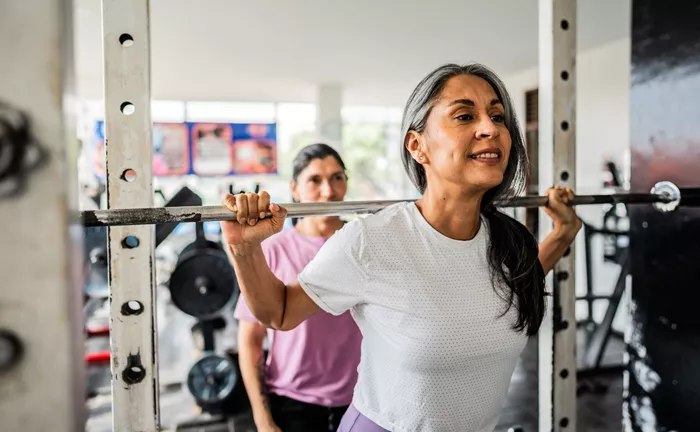
For many women, beginning a strength training routine can feel overwhelming. With a wealth of online advice, it is often unclear which exercises are most beneficial—especially during perimenopause, when hormonal changes affect muscle strength, metabolism, and recovery. Exercise physiologist and women’s health advocate Stacey Simms provides evidence-based guidance on the most essential movements for this life stage.
Understanding Biomechanical Imbalances
Speaking on the podcast A Life of Greatness, Simms highlighted common biomechanical tendencies in women. “We are naturally more quad-dominant,” she explained, noting that the front-thigh muscles often overwork compared to the hamstrings and glutes. This imbalance can lead to tightness, discomfort, and strain concentrated in the front of the body while underutilizing the posterior chain—the muscles along the back, including calves, hamstrings, glutes, and spinal muscles.
Focusing on the posterior chain is critical for maintaining posture, reducing stress on the knees and hips, and supporting functional movements such as standing, lifting, running, and jumping. It also reduces the risk of back injuries, which become increasingly relevant during perimenopause.
The Role of Hormones in Strength Development
Simms explains that estrogen, which gradually declines during perimenopause, plays a central role in muscle development, contraction strength, and speed. As a result, women in their late 30s and 40s must adopt a more targeted approach to strength training, prioritizing power and stability over high-repetition endurance workouts.
Building a Safe and Effective Foundation
Gradual progression is essential to prevent injury. Simms advises starting with mobility exercises, lighter dumbbells, and gym machines to establish proper neural pathways and build confidence before transitioning to heavier compound movements.
Six Key Strength Moves for Perimenopausal Women
Once a foundation is established, Simms recommends incorporating these six essential exercises:
Squats – Engage the quads, glutes, and core; improve lower-body stability.
Deadlifts – Full-body movement that strengthens the posterior chain and central nervous system.
Hip Thrusts – Target glutes for power, hip stability, and improved posture.
Bulgarian Split Squats – Enhance single-leg strength, balance, and functional mobility.
Push-Ups – Strengthen the chest, shoulders, triceps, and core for upper-body stability.
Pull-Ups – Develop back and arm muscles while challenging overall body coordination.
Additionally, push and pull exercises such as bench presses, overhead presses, and bent-over rows complement these movements by reinforcing core stability and supporting functional strength.
Focus on Stability and Functional Strength
Heavy compound exercises should create fatigue without complete exhaustion. “It’s about building a stable base for the body. You want to be like a bamboo straw, not a bendy one,” Simms explains. Success in these movements requires patience; Simms herself took 11 years to perform a pull-up proficiently.
Strength training during perimenopause is not about lifting the heaviest weight or achieving rapid results. Instead, it is about correcting imbalances, reinforcing the body’s foundation, and preserving long-term mobility, function, and independence.
Related topics
