
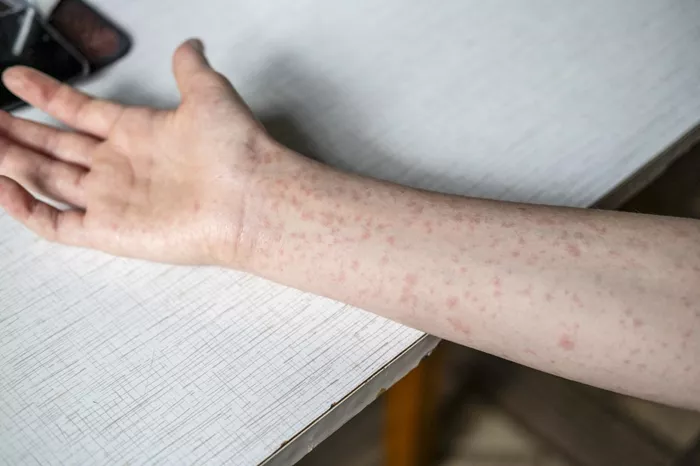
More than 150 unvaccinated students in Spartanburg County, South Carolina, are under a 21-day quarantine after exposure to measles, public health officials report. Because these students had not received the measles vaccine, they are being kept out of school during the period of possible disease transmission.
The two schools affected are Global Academy of South Carolina (serving elementary grades) and Fairforest Elementary (which serves both primary and secondary levels). The South Carolina Department of Public Health recently confirmed its eighth measles case in two weeks, this one in Greenville County. The state warned that “active, unrecognized community transmission” is underway, making vaccination more urgent.
This local outbreak comes amid a troubling nationwide surge in measles. As of early October 2025, the Centers for Disease Control and Prevention (CDC) had tallied 1,563 confirmed cases in the U.S., the highest annual number in more than three decades.
Epidemiologists say 87 percent of those are linked to 44 distinct outbreaks.
The vast majority—roughly 92 percent—of cases are in people who are unvaccinated or whose vaccination status is unknown.
Why cases are climbing
Measles was declared eliminated in the United States in 2000, but importations and transmission in under-vaccinated communities have repeatedly eroded that status.
In 2025, a large outbreak in West Texas (especially Gaines County) has been a major driver of spread.
That outbreak alone contributed hundreds of cases and at least two deaths.
Experts point to several factors fueling the resurgence:
Declining vaccine coverage in pockets of the population—some communities have vaccination rates too low to sustain “herd immunity.”
Vaccine hesitancy and misinformation, including public skepticism driven by political figures and online misinformation campaigns
International travel and importations: travelers visiting regions with active measles circulation can bring the virus back to the U.S.
Gaps in public health infrastructure and vaccine outreach, especially in marginalized or hard-to-reach communities
Risks and consequences
Measles is one of the most contagious viral diseases: up to 90 percent of susceptible close contacts can catch it.
Among those infected, complications may include pneumonia, encephalitis (brain swelling), and in rare cases death.
So far in 2025, the U.S. has recorded three deaths linked to measles.
Approximately 11–12 percent of cases have required hospitalization.
Evidence suggests that none of the hospitalized cases had documentation of receiving two doses of the MMR vaccine.
A small share (about 3 percent) of cases so far have been in people who received two vaccine doses, though none of those vaccinated cases led to hospitalizations.
What the MMR vaccine offers
The measles-mumps-rubella (MMR) vaccine is the cornerstone of prevention. After two doses, its efficacy in preventing measles exceeds 97 percent.
The vaccine also protects against mumps and rubella, diseases that can have additional health risks.
Public health agencies strongly recommend that children follow the CDC’s immunization schedule for the MMR vaccine, and that adults lacking evidence of immunity receive vaccination as needed. Schools, daycare providers, and health departments play a key role in verifying vaccination status and responding to exposure events.
What communities and families should do
Ensure vaccination: Parents should confirm that children have received two doses of the MMR vaccine on schedule.
Boost outreach: Health authorities should partner with trusted local messengers (such as community leaders) to address doubts, misinformation, and access barriers.
Quarantine and isolation: In outbreaks like the South Carolina case, unvaccinated people who are exposed may need to be quarantined for up to 21 days, depending on local health department protocols.
Postexposure prophylaxis: In some cases, a dose of measles-containing vaccine or immune globulin can be used after exposure to reduce risk of illness.
Surveillance and contact tracing: Health departments must quickly identify and monitor contacts to limit further transmission.
Conclusion
If measles transmission continues unchecked over 12 months with linked spread, the U.S. risks losing its official “eliminated” status—a threshold that would signal a major public health setback.
For now, the 2025 case count already surpasses previous recent records: the year’s cumulative total has exceeded those seen in 2019, when measles made a brief comeback.
Public health leaders warn that this resurgence is a cautionary signal for potentially broader declines in immunizations—and a reminder that vaccine-preventable diseases can return when vigilance slips.
Related topics
