
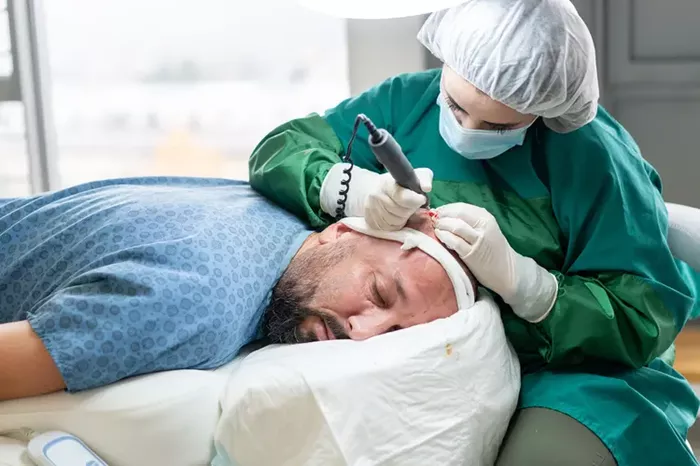
In a sleek clinic on Istanbul’s eastern side, Dr. Mehmet Erdogan carefully sketches a new hairline onto a patient’s scalp. The room is bright and clinical, yet the precision of his strokes feels almost artistic. His patient, Justin R., a 42-year-old nurse from California, watches in the mirror as his transformation begins.
Since opening in 2018, Erdogan’s Smile Hair Clinic has treated around 5,000 patients each year, boasting a reported 90–95% success rate. Roughly a third of those clients fly in from the United States, drawn by Turkey’s reputation as the world’s leading — and most affordable — destination for hair restoration.
A Multibillion-Dollar Medical Tourism Boom
Turkey has quietly built a $3 billion health tourism industry, driven largely by cosmetic and restorative procedures. According to the Turkish Health Ministry, about 2 million foreign patients visited the country in 2024, with 1 million undergoing hair transplants alone, spending an estimated $2 billion.
For many, like Justin, the motivation is simple economics. His full package — airfare, lodging, and surgery — cost about $3,400, less than one-third of what he was quoted in California, where similar procedures average $13,000 or more, according to 2023 data from the American Society of Plastic Surgeons.
At Istanbul’s airports, billboards promise “all-inclusive” makeovers: hotel stays, interpreters, airport transfers, even sightseeing tours — all centered around a new hairline.
Hidden Risks in the Industry’s Rapid Expansion
Yet, the industry’s meteoric rise has drawn scrutiny. The International Society of Hair Restoration Surgery warns of unlicensed “black market” clinics performing unsafe or rushed operations. Reports include scarring, infections, and unnatural hairlines — the fallout from a market that’s grown faster than regulators can monitor.
Psychologist Glen Jankowski of University College Dublin, author of Branding Baldness, notes that overharvesting hair follicles or performing too many grafts in one session can impact blood pressure and wound recovery. “Procedures must be done by medically trained professionals,” he says.
He adds that some patients are pressured into taking minoxidil or finasteride — hair-growth medications with potential hormonal and sexual side effects — without full consent. “These drugs require proper medical guidance and monitoring,” he warns.
Turkey’s Health Ministry has promised stricter inspections and licensing requirements, but with estimates suggesting 5,000 clinics in Istanbul alone, comprehensive oversight remains challenging.
The Social Media Surge
Beyond affordability, TikTok and Instagram have made hair transplants a global trend. Videos of men revealing new hairlines under hashtags like #HairTransplantJourney and #NewMeInTurkey rack up millions of views.
“Most men fear hair loss not because of vanity but because of what society tells them,” Jankowski explains. “Social media amplifies that anxiety — and normalizes surgery as the fix.”
At Smile Hair Clinic, a wall-mounted screen loops clips of smiling patients boasting, “Best decision ever.” The cycle feeds itself: the more success stories shared online, the more men book flights to Istanbul.
Health Data Snapshot: Hair Transplant Trends (2024–2025)
- Average cost in Turkey: $2,800–$3,600
- Average cost in U.S.: $12,000–$15,000
- Success rate (global average): 85–95%
- Post-operative infection rate: 2–5% (higher in unregulated clinics)
- Most common technique: Follicular Unit Extraction (FUE)
- Average recovery time: 7–10 days
Expert Health Advice for Prospective Patients
Before choosing a clinic, experts recommend:
- Verify accreditation through the Turkish Health Ministry or international bodies.
- Confirm the surgeon’s credentials — avoid clinics that delegate procedures to technicians.
- Ask for aftercare plans and follow-up consultations, ideally with a local dermatologist.
- Avoid bargain deals that promise “unlimited grafts” or same-day surgery.
- Discuss medication risks (minoxidil, finasteride) with a licensed doctor.
A Confidence Boost — or a Cautionary Tale
Months after his operation, Justin R. says his new hairline has boosted his confidence and saved him thousands. “I feel younger and more self-assured,” he says.
Dr. Erdogan agrees that most patients leave satisfied, but acknowledges the industry’s “Wild West” phase: “Patients must do their homework. The demand is outpacing regulation.”
For others, the solution lies in acceptance. “There’s wisdom in baldness,” says Jankowski. “It’s low-maintenance, natural, and safe. Sometimes the healthiest choice is to embrace it.”
Related topics
Top Hair Transplant Clinics in Turkey 2025: Costs, Methods, and Patient Care
Male Hair Transplant: Why Turkey Tops Global Choices
Laser Hair Removal or Electrolysis: Best Permanent Hair Removal Options
