
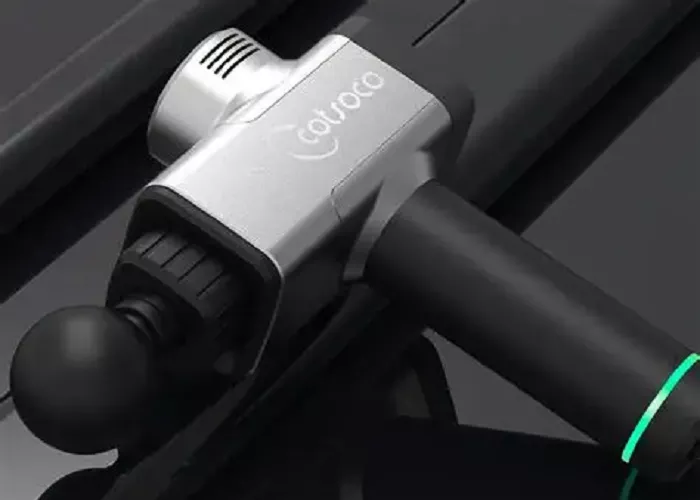
A massage gun is a handheld device designed to deliver percussive therapy, which involves applying rapid pulses of pressure and vibration to the body’s soft tissues.
Unlike simple vibration devices, massage guns combine high-speed oscillation with a degree of targeted pressure, allowing the massage head to penetrate superficial muscle layers and reach deeper tissue structures. This action aims to relax tight muscles and the surrounding fascia, the connective tissue web that encases muscles and organs.
The history of percussive massage dates back to ancient times, but modern electric massage guns have surged in popularity only in recent years, becoming a common tool for athletes and the general public alike. These devices typically feature multiple attachments and power settings, enabling users to customize their experience from gentle warm-up to intense deep tissue work, providing a level of personalization that differs from traditional manual massage.
Primary Applications and Benefits for Muscle Recovery and Performance
The primary uses for massage guns are centered around pre-workout preparation and post-exercise recovery. Employing a massage gun before physical activity can help increase blood flow and warm up the muscles, potentially enhancing performance and reducing the risk of injury.
Following a workout, the device can be instrumental in the recovery process by alleviating Delayed Onset Muscle Soreness (DOMS), the pain and stiffness felt hours after strenuous exercise. The percussive action is believed to help reduce inflammation, increase local circulation, and may assist in dispersing metabolic waste products like lactic acid that accumulate in muscles.
Beyond athletic contexts, massage guns are also used to address general muscle tightness and knots caused by repetitive movements, poor posture, or stress, contributing to improved flexibility and range of motion.
Essential Techniques for Safe and Effective Application
Using a massage gun correctly is crucial to maximize benefits and prevent injury. The general recommendation is to apply the device for short periods, typically 30 seconds to two minutes per muscle group.
Beginners should always start on the lowest setting to assess tolerance before gradually increasing intensity. The device should be guided slowly along the muscle belly, following its natural direction, rather than being held stationary on one spot for too long, which can cause discomfort or bruising.
It is important to let the weight of the gun and its percussion do the work, avoiding excessive pressure from the user. Gliding the attachment over the skin is generally preferred, while oscillating in small circular motions can help target specific knots. The user must pay close attention to the body’s feedback; if pain occurs, the intensity should be reduced or the session stopped.
Critical Safety Guidelines and Areas to Avoid
While beneficial, massage guns must be used with caution and are not suitable for all areas of the body or medical conditions.
A fundamental rule is to never apply the device directly over bones, joints, major nerves, or the spine, as the intense vibration can cause significant discomfort and potential damage to these structures. Additionally, massage guns should be avoided on areas with acute injuries, sprains, fractures, bruises, open wounds, sunburn, or skin infections.
Certain populations need to exercise particular caution or avoid use altogether, including individuals with blood clotting disorders, deep vein thrombosis, osteoporosis, severe osteoporosis, diabetes with neuropathy, or those taking blood-thinning medications. Pregnant women and adults over 65 should consult a healthcare provider before using a percussion massager.
Key Factors to Consider When Selecting a Massage Gun
The market offers a wide array of massage guns with varying features and price points. When choosing a device, key considerations include its power (often measured in stall force), amplitude (the depth the massage head travels), and battery life.
For most users, a device with multiple speed settings provides necessary versatility for different muscle groups. Attachments are equally important; larger, rounder heads are ideal for large muscle groups like the quadriceps and back, while smaller, pointed cones are designed for targeting trigger points in smaller areas like the shoulders.
Noise level is another practical factor, as devices with brushless motors tend to be quieter and more durable. Reading independent product reviews can help identify models that offer the best combination of performance, reliability, and value for one’s specific needs and budget.
Integrating Percussion Therapy into a Holistic Wellness Routine
A massage gun is a valuable tool for managing muscle tension and aiding recovery, but it is most effective when part of a comprehensive wellness approach. It is not a substitute for professional medical advice, diagnosis, or treatment for underlying conditions.
For optimal results, percussive therapy should be combined with other healthy practices, such as proper hydration, balanced nutrition, adequate sleep, and consistent stretching or foam rolling. While convenient, a massage gun cannot replicate the nuanced assessment and treatment provided by a qualified massage therapist or physical therapist, particularly for complex musculoskeletal issues.
Understanding its role as a supplementary aid for muscle maintenance, rather than a cure-all, is key to utilizing the device safely and effectively.
Related topics:
