
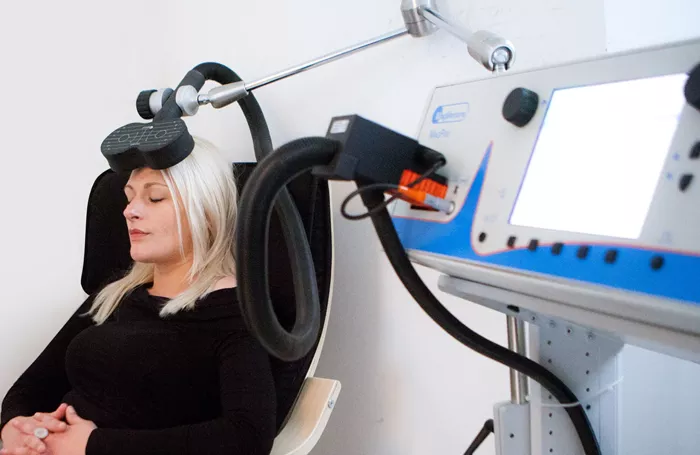
A new study from UCLA Health suggests that personalized brain stimulation, specifically high-definition transcranial direct current stimulation (HD-tDCS), may offer a faster and more effective treatment for moderate to severe depression compared to traditional methods.
HD-tDCS delivers targeted electrical currents to precise brain regions involved in regulating mood, using smaller electrodes and neuroimaging to customize the therapy to each patient.
The study, published in JAMA Network Open, involved 71 participants with depression who were split into two groups. One group received 12 days of HD-tDCS treatment, while the other received a sham (placebo) treatment. Mood improvements were assessed before, during, and up to four weeks after treatment.
Results showed that the HD-tDCS group experienced significant and sustained mood improvements beginning after just six days of therapy. These improvements were faster and more durable compared to outcomes reported in previous studies of conventional tDCS, psychotherapy, and medications. Participants tolerated the treatment well, with mild or no side effects reported.
According to Dr. Mayank Anant Jog, assistant professor of neurology and the study’s lead author, accurately targeting depression-related brain regions was key to these mood benefits. He also noted potential for HD-tDCS to aid anxiety treatment, although further studies are needed.
Dr. Katherine Narr, principal investigator, highlighted HD-tDCS’s safety and convenience, including potential for future at-home use, presenting a promising alternative for patients seeking options beyond medications and talk therapy.
The study has limitations, such as not exploring how HD-tDCS interacts with psychotropic medications, and it did not fully test the personalized targeting approach. Future research will focus on these areas and the long-term effects of extended treatment.
YOU MAY ALSO LIKE
Can Personalized Exercise Become the Frontline Therapy for Depression?
Rising Child Depression in South Korea Sparks Urgent Focus on Treatment Options
