
The National Institutes of Health (NIH) is championing a renewed focus on whole-virus vaccines, even as many infectious disease specialists warn the approach may be a step backward.
Earlier this month, the Trump administration announced it would halt $500 million in mRNA vaccine research and redirect funding toward what it calls “Generation Gold Standard,” a whole-virus vaccine platform.
“Generation Gold Standard is a paradigm shift,” NIH Director Dr. Jay Bhattacharya said in May, describing the initiative as an effort to extend protection beyond strain-specific limits and better prepare for future viral threats. The platform, he added, modernizes traditional vaccine technology for the 21st century.
“It’s somewhat of a step backward,” said Dr. James Campbell, vice chair of the American Academy of Pediatrics Committee on Infectious Diseases. “We’ve had inactivated whole-virus vaccines for a very, very long time.”
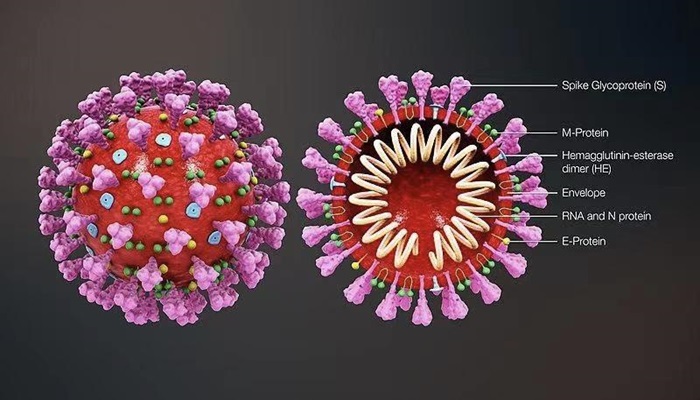
Whole-virus vaccines date back to Louis Pasteur’s rabies vaccine in the late 1800s. Unlike newer platforms that target specific viral proteins, these vaccines use either inactivated or weakened versions of entire viruses.
“You take the virus, grow it up, purify it and kill it with an inactivating agent,” explained Dr. Paul Offit, director of the Vaccine Education Center at Children’s Hospital of Philadelphia. “That’s a whole-killed viral vaccine.”
While the approach may sound comprehensive, experts say it often doesn’t improve immune response. Campbell noted that single-antigen vaccines, such as the hepatitis B vaccine, provide near-total protection without using the full virus.
Covid-19 offered a recent example: countries that relied on whole-virus vaccines saw weaker protection than those using mRNA-based shots. A study in Singapore found recipients of whole-virus Covid vaccines were nearly twice as likely to become infected compared with those who received mRNA vaccines.
Beyond reduced effectiveness, whole-virus vaccines can sometimes be harmful.
Campbell pointed to a 1960s clinical trial of a whole-virus RSV vaccine that caused “antibody-dependent enhancement,” making infections more severe rather than preventing them. The trial set RSV research back decades.
Some whole-virus vaccines remain in use today, including those for hepatitis A, rabies and seasonal influenza. Still, Campbell cautioned against assuming the platform offers a path to universal flu protection.
“If it’s just whole-virus, and it’s one strain, that’s what we do now,” he said.
The Department of Health and Human Services (HHS) argues otherwise. Press secretary Emily Hilliard called “Generation Gold Standard” a critical step toward pandemic preparedness, saying the platform could provide “broad, long-lasting protection” against influenza and coronaviruses. The approach relies on beta-propiolactone, a chemical long used to inactivate viruses in vaccines.
Developing a universal flu vaccine has been a decades-long goal, as the constantly mutating virus requires annual shots. Experts, however, worry that abandoning mRNA research in favor of older methods risks slowing progress.
“If something bad happens, like a bird flu pandemic, we will be less prepared,” Offit warned, noting that mRNA vaccines can be produced much faster than whole-virus alternatives.
Virologist Angela Rasmussen of the University of Saskatchewan agreed, stressing the logistical challenges: “You actually have to grow a ton of virus and then inactivate it. With mRNA or protein subunit vaccines, production can be done synthetically and adapted quickly as new strains emerge.”
The administration’s decision eliminated 22 ongoing mRNA studies, including one on bird flu.
Campbell urged policymakers to avoid restricting vaccine development to a single platform. “The devil is in the details,” he said. “Multiple approaches should be tested, and the best ones will emerge through science — not sweeping statements about what’s allowed.”
READ MORE
Denied Coverage? 7 Strategies to Win Health Insurance Appeals
Most Americans Drink Far Less Juice Than Federal Guidelines Permit
Families Flee U.S. as Hospitals Halt Transgender Health Services
