
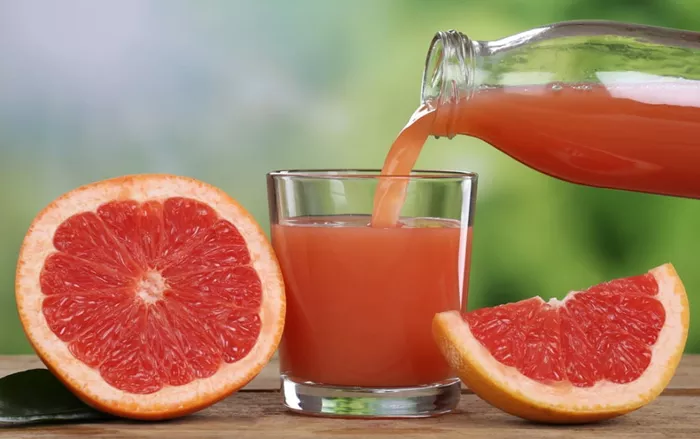
A new study has found that most Americans consume significantly less 100% fruit juice than recommended by federal dietary guidelines—yet those who do drink juice tend to have higher-quality diets overall.
The analysis, published in the journal Nutrients, examined national beverage consumption patterns and revealed that juice intake is well below the Dietary Guidelines for Americans (DGA) limits.
Researchers also found that juice consumption was linked to better nutrition, including greater intake of fruit, whole grains, vitamin C, potassium, and calcium, and reduced intake of added sugars, sodium, and saturated fat.
Background: Juice Versus Sugary Drinks
The 2020–2025 DGA advises limiting fruit juice to prevent excess calorie intake, with age-based recommendations ranging from ½ cup daily for toddlers to 1.25 cups for adult men. At least half of all fruit consumption should come from whole fruit for adequate fiber.
Despite these recommendations, national surveys show that Americans drink very little juice compared with sugar-sweetened beverages (SSBs), which are consumed in far greater amounts—particularly among children and young adults.
Ironically, concerns about childhood obesity have often been linked more to juice than to SSBs, even though the latter contribute substantially more calories with fewer nutrients.
Orange and apple juice remain the most common choices, and previous research suggests that juice can provide beneficial compounds and contribute positively to diet quality.
About the Study
Researchers analyzed data from more than 15,000 participants, including 4,086 children and 10,925 adults, using dietary intake records from the National Health and Nutrition Examination Survey (NHANES) between 2017 and 2023.
The team examined beverage intake by age, sex, income, and race/ethnicity, and compared juice consumption to DGA and pediatric recommendations.
Beverage intake was categorized into six groups: water, milk, 100% juice, diluted juice, sugar-sweetened beverages, and low-calorie drinks. Diet quality was measured using the Healthy Eating Index 2020 and the Nutrient Rich Food Index.
Water dominated American beverage consumption, accounting for about 40% of all drinks reported. By contrast, diluted juice was “practically nonexistent” in diets, while 100% juice was consumed by only about one-quarter of participants.
Key Findings
Demographic differences: Juice intake was higher among younger children, older adults, and lower-income groups, as well as among Mexican American and non-Hispanic Black participants. Mexican American children consumed the most water and milk, while non-Hispanic Black children drank the least water.
Low overall consumption: Nearly 95% of participants consumed less than 1 cup of juice per day, and 88% drank less than ½ cup per day. Only a small minority of young children exceeded DGA limits.
Whole fruit not displaced: On average, the juice-to-whole-fruit ratio was 0.4, within federal recommendations, indicating that juice did not significantly replace whole fruit in diets.
Better diet quality among juice drinkers: Consumers of 100% juice had higher scores on both dietary quality measures, reflecting healthier overall eating patterns compared to non-drinkers.
Conclusions
The study concludes that juice consumption in the U.S. remains modest and within federal guidelines, with little evidence that it displaces whole fruit. Instead, juice appears to support diet quality by providing nutrients and substituting for less healthy beverages like sugary sodas.
The authors caution, however, that self-reported dietary recalls have limitations and that the cross-sectional design cannot prove cause and effect. They also stress that affordability remains a major barrier to meeting fruit intake recommendations, highlighting the need for policies that make whole fruit more accessible.
READ MORE
Families Flee U.S. as Hospitals Halt Transgender Health Services
New 6-6-6 Walking Routine Gains Momentum as Easy Fitness Strategy
Private Cancer Treatment Surges as Patients Turn Away from NHS
