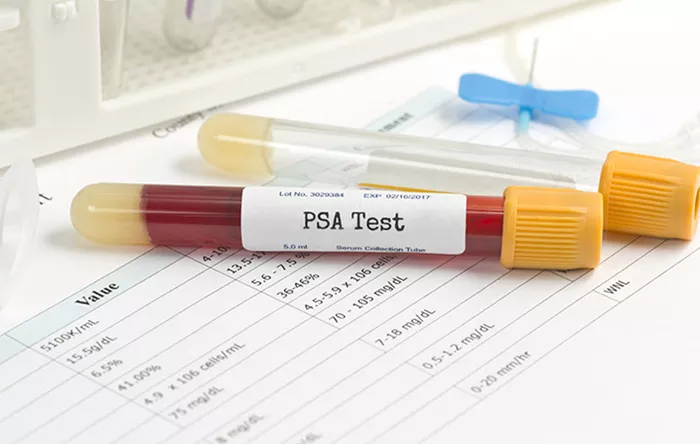
A PSA test measures the level of prostate-specific antigen (PSA), a protein produced by the prostate gland, in a blood sample. Elevated PSA levels can indicate prostate cancer or other prostate-related conditions, including an enlarged prostate or infection.
Why It Matters
Prostate cancer ranks as the second leading cause of cancer-related deaths among men worldwide. Healthcare providers may recommend PSA testing for men at higher risk or for those monitoring known prostate issues.
Men at increased risk include those with:
- Age: Risk rises after 50.
- Family history: A relative with prostate cancer increases your risk.
- Race: Black men are at higher risk, often developing prostate cancer at a younger age.
Doctors may also recommend a PSA test if symptoms are present, such as:
- Painful or frequent urination
- Blood in urine or semen
- Loss of bladder control
- Lower back pain
- Preparing for the Test
Certain activities or medications can affect PSA levels. Providers may suggest avoiding the following for 24–48 hours before testing:
- Sexual activity, including masturbation
- Vigorous exercise, such as cycling
- Medications like Propecia (finasteride) or Avodart (dutasteride)
Consult your doctor before stopping any medication. Wearing comfortable clothing and bringing a companion can help ease anxiety during the blood draw.
How the Test Works
The PSA test involves a simple blood draw from a vein in the arm, typically taking less than five minutes. During the procedure, a healthcare professional will:
- Clean the area with an antiseptic solution.
- Apply a tourniquet to the upper arm.
- Insert a needle to collect blood in a vial.
- Remove the needle and cover the site with a bandage.
Most men can resume normal activities immediately, though some may feel lightheaded or weak.
Safety and Risks
The PSA test is generally safe. Minor discomfort or bruising at the needle site is common. Rare complications include:
- Excessive bleeding or infection
- Nerve damage
- Persistent pain
Understanding Your Results
PSA levels are measured in nanograms per milliliter (ng/mL). Levels above 4.0 ng/mL are often considered higher than normal, though age-specific cutoffs may apply. Elevated PSA does not confirm cancer. Additional testing may include:
- Digital rectal exam (DRE): Physical examination of the prostate.
- Urine tests: Identify infections that could raise PSA.
- Prostate biopsy: Small tissue samples are analyzed for cancer cells—currently the only definitive diagnostic method.
- MRI scans: Detailed imaging can reveal lumps or abnormalities.
Results are usually available within a day, either through a lab portal or directly from your doctor. Follow-up testing helps determine whether further intervention is necessary.
Bottom Line:
The PSA test is a crucial tool for early detection of prostate cancer in men over 50. While an elevated PSA does not guarantee a cancer diagnosis, it signals the need for further evaluation to ensure timely and effective care.
READ MORE
- Prostate Cancer: Targeted PSA Testing Urged for High-Risk Men
- PSA Test Debate: Risks Outweigh Benefits for Many Men
- Timely PSA Tests Key for Men’s Prostate Health