
Researchers at Vanderbilt University have pioneered a novel optical technique capable of precisely analyzing the biochemical composition of vaginal fluid, shedding new light on the delicate microbial balance essential for vaginal health.
This breakthrough could revolutionize the early detection and management of vaginal dysbiosis, a condition where harmful shifts in the microbiome increase risks of infections, pregnancy complications, and other serious health issues.
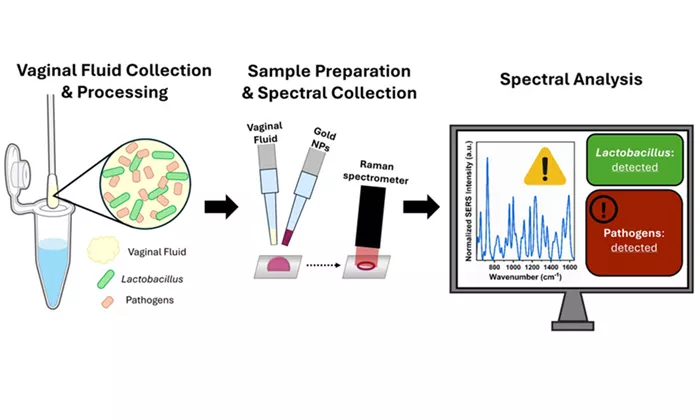
The study, recently published in Biophotonics Discovery, involved collecting vaginal fluid samples from 19 women during routine gynecological exams. Scientists employed surface-enhanced Raman spectroscopy (SERS)—an advanced optical method—to capture unique biochemical fingerprints from the fluid.
Using both a sophisticated laboratory Raman microscope and a portable Raman spectrometer, the team analyzed the presence of proteins, lipids, organic acids, and sugars, which reflect the underlying microbial environment.
Complementing the optical data, molecular techniques such as quantitative PCR were used to identify key bacteria, focusing on Lactobacillus iners, Lactobacillus crispatus, Gardnerella vaginalis, and Streptococcus agalactiae.
Crucially, the study revealed distinctive biochemical patterns linked to specific microbes: samples containing Gardnerella vaginalis, associated with bacterial vaginosis, exhibited elevated protein and lipid levels but reduced organic acids—consistent with its disruptive role in vaginal health.
Conversely, Lactobacillus iners, a beneficial yet elusive bacterium often missed by traditional diagnostics, correlated with higher organic acid concentrations and diminished protein and polysaccharide signals.
Significantly, Gardnerella vaginalis was detected even in participants without symptoms or diagnosed infections, indicating that SERS may identify early or subclinical microbiome changes before they manifest clinically. This capacity for preemptive detection underscores the technology’s potential for preventive care and timely intervention.
Moreover, the portable Raman spectrometer demonstrated accuracy comparable to the laboratory setup, suggesting that future point-of-care devices could provide rapid, reliable vaginal health assessments without the need for extensive laboratory infrastructure.
While this pilot study involved a limited number of bacterial species and participants, it offers compelling proof of concept. Researchers plan to expand their study with larger cohorts and more comprehensive genetic sequencing to deepen understanding of the vaginal microbiome.
Nonetheless, this innovative use of SERS marks a promising step toward more precise, objective, and accessible diagnostics in women’s health.
READ MORE
