
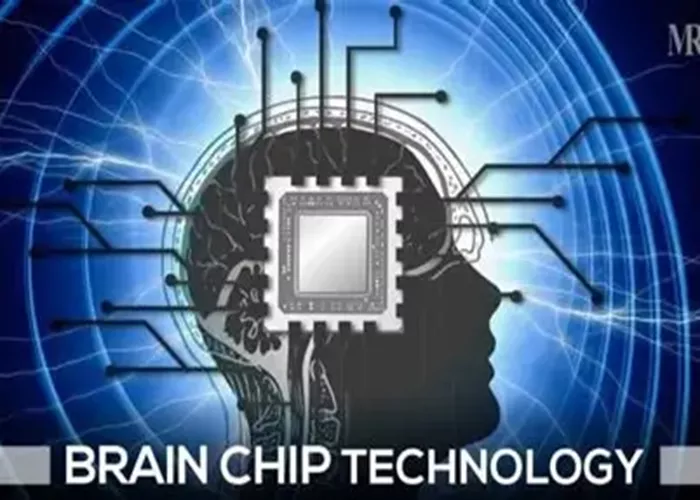
Since the Industrial Revolution, the brain – machine interface technology, which fuses humans and machines, has inspired the boundless imagination of humanity. After more than half a century of exploration, brain – chip technology, once regarded as a laboratory wonder in the realm of brain – machine interfaces, is now quietly stepping into reality.
According to the American financial news website Quartz, despite remarkable achievements, brain – chip technology still faces numerous challenges. Whether it is improving reading accuracy or addressing issues such as network security and privacy protection, the industry and the technical community urgently need to continue their efforts.
“Neuralink” Leads in Technology Application
In the field of foreign brain – chip technology, Neuralink, founded by Elon Musk, has attracted much attention. So far, seven subjects have successfully received the “Telepathy” brain chips developed by the company. On January 28, 2024, 31 – year – old Arbour, who was paralyzed from the shoulders down due to a diving accident, became the first user to receive the “Telepathy” chip. Now, with the help of this technology, he has extended his reach in daily work and life to activities such as emailing, web editing, academic research, and financial management, almost regaining the ability to live independently.
Mike, the fourth subject of Neuralink, has now become the world’s first person to work full – time with the help of a brain – machine interface. This survey technician can skillfully operate CAD design software from home. Another subject, Alex, who has lost arm function, can still continue to engage in 3D parts design work with the “Telepathy” chip.
The ability to truly change the life trajectories of patients seems to mark the brain – chip technology’s move towards mature application.
Innovation Competition Among Competitors
In the race for brain – implantable chips, Neuralink is by no means the only contender. Multiple companies are vying with each other using different technical routes.
According to the American news website CNBC, Paradromics, based in Austin, achieved a major breakthrough in May. They successfully completed the first human implantation experiment of a brain chip. The brain chip of this company is equipped with 1,600 electrodes, which has a technical advantage over Neuralink’s chip design with 1,024 electrodes.
Precision Neuroscience, co – founded by Ben Rapoport, a former executive of Neuralink, takes a different approach and uses a surface – film technology that does not penetrate brain tissue. This less – invasive method has obtained a limited – use license from the US Food and Drug Administration.
Synchron Biotechnology has made progress in the minimally – invasive field. Their solution of implanting electrodes through blood vessels avoids craniotomy. So far, they have successfully implanted 10 patients. With the capital support of Jeff Bezos and Bill Gates, the company is expected to soon launch the world’s first brain – chip product that supports Bluetooth connection to Apple devices.
The University of California, Davis, Brown University, Massachusetts General Hospital affiliated with Harvard Medical School, and other institutions have jointly developed a speech synthesis system. For the first time, they have achieved the direct conversion of brain signals into natural speech (with a delay of only 10 milliseconds), allowing a patient with amyotrophic lateral sclerosis who has lost the ability to speak to “speak again,” completely eliminating the complex process of traditional brain – signal – to – text – to – speech conversion.
Carnegie Mellon University in the United States has proven that non – invasive technology also has promising prospects. They have achieved real – time control of mechanical fingers with an electroencephalogram – reading cap, providing a vivid example of future non – surgical brain – machine interaction.
This technological revolution of brain chips, which integrates neuroscience, engineering, and clinical medicine, is reshaping the paradigm of human – machine interaction. Different technical routes are shining brightly, converging towards the common goal of benefiting humanity.
Still Need to Overcome Technical and Ethical Hurdles
Although brain – machine interface technology has made significant breakthroughs, to achieve true widespread application, it still needs to cross the dual peaks of technology and ethics.
Take the most advanced speech – decoding system as an example. Although it can significantly improve the recognition accuracy of patients’ originally unclear speech, the 43.75% word – error rate indicates that there is still a long way to go before achieving natural and smooth communication.
There are still many other challenges at the technical level: How can we upgrade from “command response” to “free expression”? How can we reduce implantation trauma and improve long – term stability and compatibility? The degree to which these questions are resolved will determine whether this technology can move from the laboratory to a broad range of real – world application scenarios.
At the same time, privacy and security protection cannot be ignored. Neural data, which carries human thought activities, requires a more rigorous protection mechanism than the financial system. And the artificial intelligence algorithms that decode neural signals need to be like interpreters proficient in multiple languages, accurately understanding the “thought dialects” of different users in different situations.
Related topics:
Is It Time to Switch from Zoloft to Prozac? Here’s What You Need to Know
Young Adults with ADHD Symptoms Prefer Stimulating Music
New Brainwave Biomarkers Offer Precision Target for OCD Treatment
