
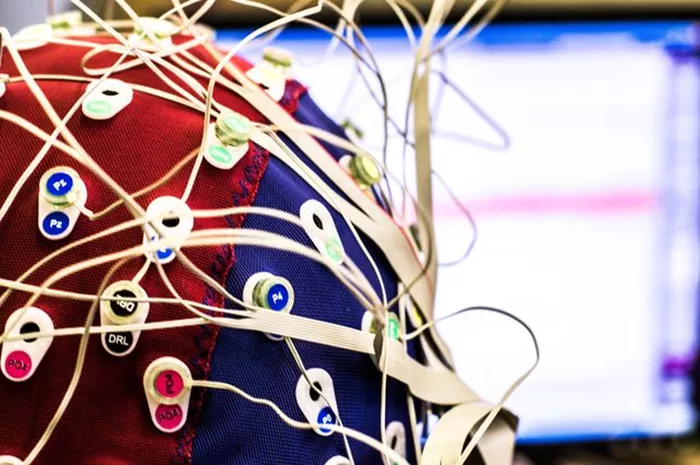
In a breakthrough that could revolutionize the treatment of obsessive-compulsive disorder (OCD), scientists have identified the first brainwave biomarkers linked to the condition. The discovery opens the door to more precise, personalized deep brain stimulation (DBS) therapies that respond in real time to compulsive behaviors.
Researchers from the Netherlands Institute for Neuroscience and Amsterdam University Medical Center (Amsterdam UMC) used surgically implanted electrodes to detect specific brain activity patterns associated with obsessions and compulsions in patients with treatment-resistant OCD.
Deep Brain Recording Reveals OCD’s Electrical Signature
OCD is marked by intrusive thoughts and compulsive behaviors that can severely disrupt daily life. For severe cases unresponsive to standard therapies, DBS offers a potential solution. The technique involves implanting thin electrodes deep in the brain to deliver controlled electrical stimulation.
In this study, 11 patients underwent DBS electrode implantation targeting key brain regions involved in emotional regulation and motor control. These included:
External Globus Pallidus (GPe): A basal ganglia structure central to integrating motor and cognitive signals.
Nucleus Accumbens (NAc): Part of the brain’s reward system, crucial for motivation and behavioral reinforcement.
Anterior Limb of the Internal Capsule (ALIC): A major white matter tract involved in emotion, decision-making, and cognition.
Anterior Lateral Anterior Commissure (alAC): A structure connecting brain hemispheres, involved in emotional and instinctual processing.
Using local field potential (LFP) recordings, researchers monitored brainwave activity during four phases: baseline (neutral video), obsession (triggered stimulus), compulsion (compulsive act), and relief (post-compulsion). Symptom severity was tracked using visual analog scales (VAS) for obsessions, anxiety, and other markers.
Alpha and Delta Waves Signal Compulsive Urges
The analysis revealed significant increases in delta (1–3 Hz) and alpha (8–12 Hz) brainwave activity during compulsive behaviors, particularly in the GPe and ALIC. Importantly, these signals were observed even during non-motor compulsions, such as repetitive thoughts or prayers, indicating that the brainwaves correspond to the internal urge rather than the act itself.
Stronger delta activity in the anterior GPe correlated with more intense self-reported obsessive symptoms, and showed a decreasing trend during the relief phase as anxiety subsided. Additionally, the ALIC exhibited abnormal theta-alpha phase-amplitude coupling—a brainwave interaction believed to reflect inefficient or pathological information processing—specifically during compulsions.
“The precision of these recordings is what sets this study apart,” Arbab noted. “Unlike fMRI or EEG, this method provides unparalleled spatial and temporal resolution.”
Implications for Personalized, Responsive OCD Therapy
This pioneering work provides the clearest biological marker yet identified for OCD, paving the way for smarter DBS systems that activate only when needed. Current DBS devices deliver constant stimulation, which can cause side effects and reduce long-term effectiveness.
“In the future, we envision DBS that only activates when brain activity matches that of a compulsive episode,” Arbab said. “This would make treatment far more targeted and efficient.”
Limitations and Future Directions
While the results are promising, the study’s small sample size (11 participants) and reliance on self-reported data limit generalizability. Additionally, the focus on subcortical regions means that some aspects of OCD, especially those involving higher-order thoughts, may not have been fully captured.
Still, the findings represent a crucial step forward in understanding the neurobiological underpinnings of OCD. By identifying precise electrical signatures of compulsive behavior, researchers are laying the groundwork for therapies that are both more effective and more personalized.
Read more:
What Is the Best Medication for Severe OCD?
Genetics, Not Bullying, May Drive Link to OCD symptoms, Twin Study Suggests
