
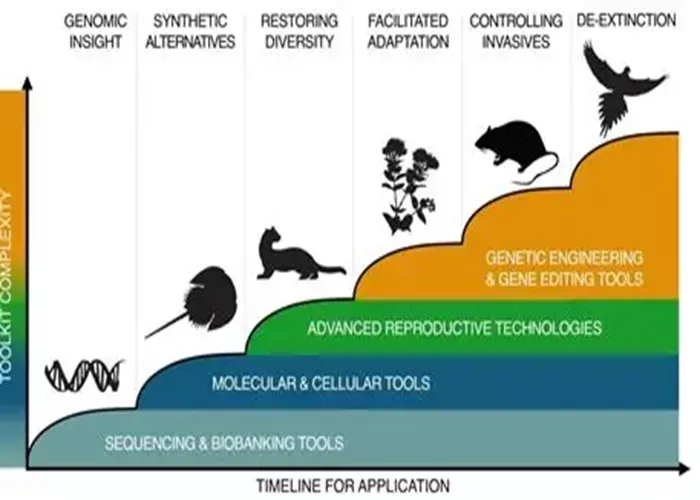
A recent study in Nature Reviews Biodiversity has proposed a crucial method for endangered species conservation, emphasizing the significance of combining gene – editing technology with traditional conservation approaches. This combination offers a ray of hope for biodiversity conservation amidst the escalating crisis of species endangerment.
The study highlights the severe consequence of biodiversity decline: the loss of species’ genetic diversity. Traditional conservation strategies, including establishing protected areas and conducting captive breeding programs, are effective in boosting the population numbers of endangered species.
However, they fall short in restoring the lost genetic diversity, which usually takes thousands of years to recover naturally. In contrast, gene – editing technology holds great potential. It enables the extraction of lost gene variants from century – old museum specimens, which can then be reintroduced into wild populations.
Additionally, through the “assisted adaptation” strategy, key genes can be introduced from related species, similar to how gene – editing is used in agriculture to transfer beneficial genes between different crops. This can enhance the adaptability of endangered species to environmental changes, helping them better cope with threats such as climate change and diseases.
However, the application of gene – editing technology is not without risks. Technologies like CRISPR may cause off – target effects, and the pleiotropy of genes in species with limited research is difficult to predict, potentially leading to unanticipated outcomes. Moreover, “selective sweeps” may reduce the overall genomic diversity of the species. Besides technical risks, public skepticism and lagging regulatory mechanisms also pose significant obstacles to its widespread application.
Experts emphasize that gene – editing technology should not be regarded as a substitute for traditional conservation methods. Instead, it should be used as a complementary measure after traditional approaches, such as habitat restoration and anti – poaching efforts, have successfully increased the population of endangered species.
Although it is not a panacea, in the context of rapid climate change and habitat fragmentation, gene – editing technology can effectively make up for the limitations of traditional conservation methods. It provides an important means for ensuring the survival and reproduction of endangered species, and plays a vital role in maintaining ecological balance and biodiversity.
Related topics:
“Angel Journey” in Anyang: Screen, Aid Congenital Heart Disease Kids
Revolutionary X-ray: Noise to Data, Captures Femtosecond Electron Motion
IVF Breakthrough: 8 ‘Three-Parent Babies’ Born Mitochondria Disease-Free
