
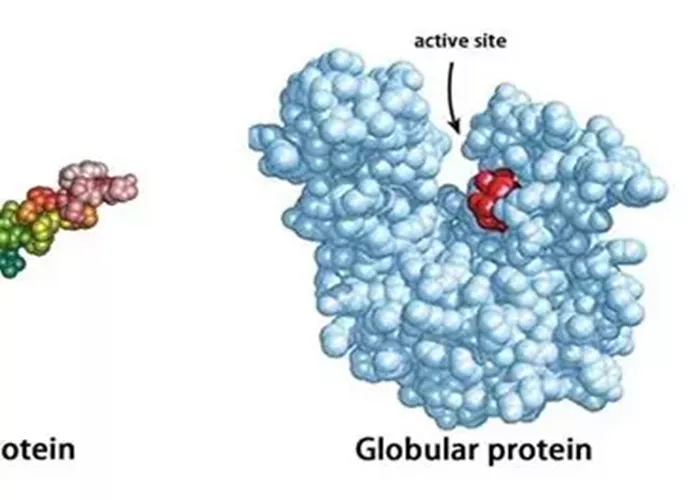
In a recent study published in the latest issue of Science, researchers from the Barcelona Centre for Genomic Regulation in Spain and the Wellcome Sanger Institute in the UK have made a significant discovery that challenges long – held beliefs about protein structure.
They found that the core regions of proteins are more stable and tolerant of changes than previously assumed, revolutionizing the understanding of proteins as fragile structures where a small change can have a cascading, destabilizing effect. This finding is expected to greatly enhance the efficiency of protein design and speed up the development of new drugs, enzymes, and other biological products.
Proteins are composed of 20 different amino acids, resulting in an astronomical number of possible combinations. Even a small protein consisting of only 60 amino acids can have as many as different arrangements, which is nearly equivalent to the number of atoms in the universe. For a long time, the scientific community has been puzzled by how evolution managed to select a small number of combinations with stable structures and reliable functions from such an incredibly complex array of possibilities.
The dominant view in the past was that the amino acids in the core regions of proteins are closely packed, and any alteration could potentially lead to the instability of the overall structure. However, the new research indicates that this traditional concept is inaccurate.
The research team chose small protein structure called SH3, which is widely present in various organisms, as the subject of their study. They then created hundreds of thousands of slightly different versions of SH3 and tested whether they could still fold properly and function effectively. The results showed that the vast majority of these variants could maintain a stable structure. Only a small number of “key amino acids” were truly indispensable and could not be altered. This suggests that the folding rules of proteins are much more “forgiving” than previously thought.
Based on the experimental data, the researchers also developed a machine – learning model to predict the stability of protein sequences. When this model was used to compare more than 50,000 natural SH3 sequences from bacteria, plants, insects, and humans, it demonstrated a high level of accuracy, even for sequences that had less than 25% similarity to the human version.
This achievement has important implications for protein engineering. Currently, when researchers design enzyme – based drugs, they often need to conduct numerous experiments to screen different variants one by one, a process that is slow and costly. With the help of the new model, they can test multiple design options simultaneously on a computer, significantly improving the efficiency of research and development.
Related topics:
New Study Links Restrictive Diets to Higher Risk of Depression
EMA Backs Zuranolone for Postpartum Depression
“Angel Journey” in Anyang: Screen, Aid Congenital Heart Disease Kids
