
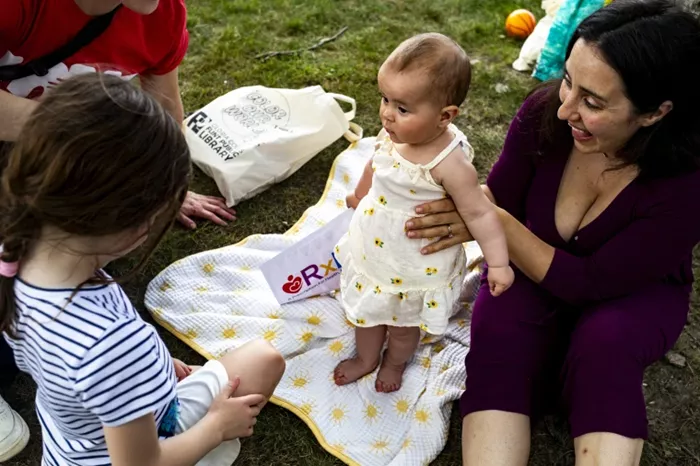
A lively “baby parade” took place Friday in Flint, Michigan, where mothers clad in red sashes strolled with strollers and toddlers in tow. The event, celebrating families, also distributed diapers and provided a joyful space for children to play.
These red sashes identified the women as participants in Michigan’s groundbreaking Rx Kids program, which since its 2024 launch has provided cash payments to pregnant women and new mothers during the first year of their children’s lives.
Amid rising concerns over childcare costs and national conversations about declining birth rates, this initiative has garnered bipartisan support and attention as a potential blueprint for other states.
How the Rx Kids Program Works
Funded by a combination of state, local, and philanthropic sources, Rx Kids offers eligible mothers up to $7,500. Eligibility is simple — women must be pregnant and reside in participating Michigan locations, but there are no income restrictions or conditions on how the money is spent.
Participants receive an initial $1,500 before delivery and monthly payments of $500 for six to twelve months post-birth, depending on the area. Dr. Mona Hanna, a pediatrician and the program’s founding director, emphasizes that this period is one of significant financial vulnerability for new parents and critical development for infants.
While most mothers use the funds to cover essentials like diapers, formula, clothing, and breastfeeding supplies, the money can also assist with food, rent, utilities, or transportation. For some, it enables affordable childcare and a return to work; for others, it means the freedom to stay home longer with their baby.
Currently, Rx Kids operates in Flint, Pontiac, Kalamazoo, and five counties in Michigan’s Upper Peninsula, with plans to expand into rural central Michigan and Detroit-area cities by fall.
Positive Impact and Growing Demand
Dr. Hanna reports near-universal enrollment among eligible Flint mothers, reflecting the program’s broad reach and appeal. The locations were strategically chosen to focus on low-income families but maintain an open-door policy to avoid stigmatization.
Luke Shaefer, a University of Michigan public policy professor and Rx Kids co-founder, explains that removing income barriers encourages wider participation. The celebratory “baby parade” events further help mothers feel supported and valued, countering the societal tendency to overlook new parents’ challenges.
Participants like Angela Sintery, a preschool teacher, praise the program for alleviating financial stress. Having her first child 19 years earlier without such support, Sintery says the cash assistance made her second pregnancy and early motherhood much easier.
Celeste Lord-Timlin, another Flint resident, used the monthly payments to continue graduate school during pregnancy, noting the funds allowed her family to “really enjoy being new parents.”
Changing the National Conversation on Parenting Support
While philanthropy currently sustains Rx Kids, Dr. Hanna envisions government taking the lead eventually. Michigan Democrats have introduced bipartisan legislation to expand the program statewide, though a divided legislature and limited bill passage this year make swift expansion unlikely.
Senator John Damoose, a Republican supporter from Michigan’s Upper Peninsula, sees the program as a practical, pro-life approach that transcends political divides. “This is a way for us to put our money where our mouth is,” he said.
Nationally, political figures from various perspectives have expressed concern over America’s declining birth rate. Yet public opinion, as revealed by an Associated Press-NORC poll, indicates that most Americans prioritize addressing the high costs of childcare over simply increasing birth rates.
The recent federal tax bill under the Trump administration boosted the child tax credit slightly and introduced “Trump Accounts” — savings accounts for children with government seed money — but these initiatives offer limited immediate financial relief for new parents.
Dr. Hanna critiques the lack of robust social infrastructure supporting families. “No wonder people aren’t having children and our birth rates are going down,” she said.
Though the Trump administration has considered one-time $5,000 “baby bonuses” akin to Rx Kids payments, critics argue such amounts fall short of covering childcare and other ongoing expenses. Nonetheless, supporters maintain that any direct cash assistance can make a meaningful difference during the critical early months.
Senator Damoose calls the program part of “a new narrative or the rekindling of an old narrative” that celebrates children and families in America.
READ MORE:
