
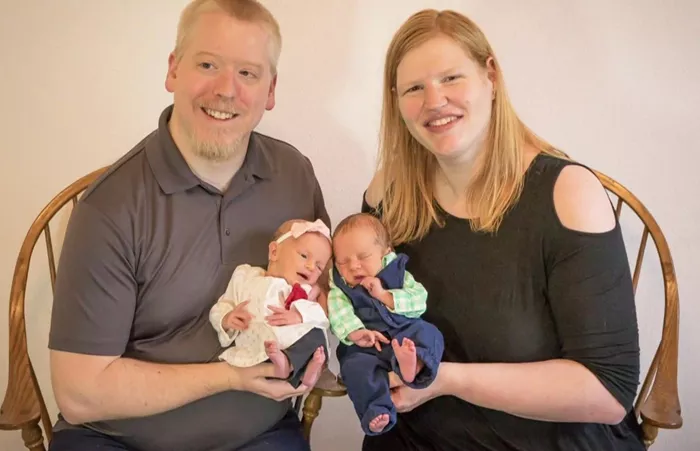
Recently, a baby named Thaddeus Daniel Pierce was born in Ohio on July 26, 2025, arriving after being implanted from an embryo frozen in 1994, making it over 31 years old at the time of birth.
This surpasses the previous record of twins born in 2022 from embryos that had been frozen for 30 years.
The embryo was originally created for Linda Archerd and her then-husband; one embryo had been used earlier to produce a daughter. The remaining three were retained in long-term cryogenic storage until Linda chose to “adopt” them through a faith-based embryo adoption programme in the U.S.
Embryo cryopreservation and record-setting births
Embryo cryopreservation—the freezing and long-term storage of embryos—has been used since the 1980s to preserve excess IVF embryos for future use. The first baby born via this method arrived in 1984, and there have been numerous successful births using embryos frozen for decades.
Previously, Molly Gibson held the record for longevity of frozen embryo at birth: her embryo had been frozen 27 years before being implanted in 2020.
In 2022, twins Lydia and Timothy Ridgeway were delivered from embryos frozen in 1992, breaking Molly’s record at the time.
These cases have shown that storage duration does not appear to impact embryo viability or birth outcomes. A broad study of over 11,000 cryopreserved human embryos found no significant differences in post‑thaw survival, implantation, pregnancy, miscarriage, or live birth rates between embryos stored for different durations; instead, factors like donor age and embryo quality are much more predictive of success.
The Ohio story in detail
Birth details: Thaddeus was born to Lindsey (35) and Tim (34) Pierce—who had been trying to conceive for seven years. The embryo had been donated by Linda Archerd, now aged 62.
History: Linda created four embryos in 1994 via IVF; one became her daughter (now 30). The remaining three stayed frozen until she opted for embryo adoption instead of discarding or anonymous donation.
Adoption and transfer: The Pierces matched with Linda’s embryo through a religious embryo adoption programme that considers factors like the donor’s faith, race, and nationality. Transfer occurred in 2024, and both mother and baby are now healthy.
Medical and ethical context: The doctor who performed the transfer—Dr. John Gordon—is committed to reducing long‑term embryo storage via faith-aligned beliefs that every embryo deserves a chance at life.
Why this matters
Scientific and medical milestone: This is the oldest known embryo to result in a live birth, which demonstrates that embryo cryopreservation can remain effective indefinitely under proper conditions.
Ethical and social implications: It raises questions about the fate of millions of frozen embryos globally—and highlights embryo adoption as an alternative to disposal or indefinite storage.
Hope for families: For couples facing infertility or having unused embryos, long‑term storage doesn’t necessarily reduce the chance of later pregnancy or healthy birth.
Growing mainstream awareness: Similar fertility success stories continue to emerge, including high‑profile cases like singer Julie Mintz, who recently welcomed her baby from an embryo frozen over 14 years after freezing her eggs.
Summary
Record birth: Thaddeus is the newest record-breaker—born from an embryo frozen for more than 31 years.
Growing evidence: Successful births from embryos frozen for decades are becoming more documented, affirming long-term cryostorage viability.
Ethical dimension: Embryo adoption offers an alternative route for embryos otherwise unused.
Impact: These stories offer hope and encourage informed discussions about IVF, embryo storage, and adoption.
Read more:
IVF Births Top 13 Million Globally Since 1978
Rare flu-related brain disease in children surges across US
New government expands free IVF eligibility to couples with one child
