
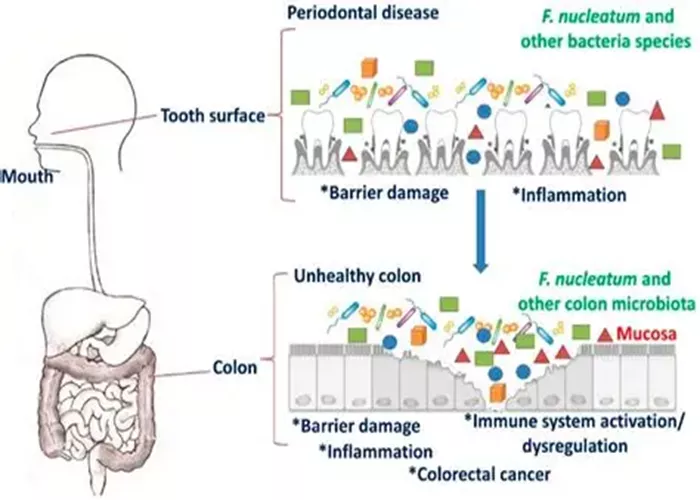
Lanzhou University researchers have achieved a major breakthrough in synthetic microbial community research, developing an artificial consortium of seven probiotic strains that effectively alleviates Fusobacterium nucleatum (F. nucleatum)-associated colorectal cancer. The findings, published recently in the international journal Advanced Science, offer new hope for targeted cancer therapy.
Scientists from the university’s School of Pharmacy announced the development on July 20, explaining that the synthetic microbiota represents a novel approach to addressing colorectal cancer linked to F. nucleatum infection—a bacterium increasingly recognized for its role in tumor progression.
“Through multi-omics analysis of cancer microbiome databases and clinical samples, we found F. nucleatum is significantly enriched in feces and tissues of colorectal cancer patients, with strong associations to lipid metabolism pathways,” said Professor Chen Peng, lead researcher of the Microbial Group Intelligent Diagnosis and Treatment Team. “This bacterium promotes tumor proliferation through multiple mechanisms and induces chemotherapy resistance, worsening patient outcomes.”
Building on these discoveries, the team employed machine learning and metabolic network reconstruction to identify seven common gut bacteria—including Bifidobacterium animalis and Lactobacillus reuteri—that form the new synthetic consortium. Laboratory validation confirmed its effectiveness in both in vitro and in vivo models.
In co-culture experiments, the artificial microbiota directly inhibited F. nucleatum growth. Animal studies using mouse colorectal cancer models demonstrated the consortium’s safety and ability to stably colonize the intestinal tract. Most importantly, the treatment yielded significant therapeutic effects:
- Reduced proliferation of F. nucleatum-induced colorectal cancer cells
- Mitigated intestinal mucosal damage
- Lowered expression of pro-inflammatory factors
- Corrected abnormalities in microbial composition
- Improved lipid metabolism disruptions
These multifaceted effects address key pathological mechanisms through which F. nucleatum exacerbates colorectal cancer, according to the research paper.
Colorectal cancer remains one of the most common malignancies globally, with gut microbiota increasingly recognized as critical regulators of disease progression and treatment response. F. nucleatum’s role in promoting tumor growth and treatment resistance has made it a prime target for novel therapeutic strategies.
The synthetic consortium approach offers several advantages: its components are well-characterized probiotics with established safety profiles; the targeted mechanism avoids broad-spectrum disruption of beneficial gut flora; and the modular design allows for potential customization based on individual patient microbiomes.
Professor Chen emphasized that while preliminary results are promising, further research is needed to validate the consortium’s efficacy in human clinical trials. The team plans to explore optimal delivery methods, dosage regimens, and potential combinations with existing chemotherapies or immunotherapies.
If translated successfully to clinical practice, this synthetic microbiota could provide a non-invasive, low-toxicity adjunct therapy for colorectal cancer patients with F. nucleatum infection, potentially improving treatment responses and survival rates while reducing adverse effects associated with conventional treatments.
The research highlights the growing potential of synthetic microbiome-based therapies in oncology, leveraging the intricate interactions between gut bacteria and human physiology to develop precision treatments tailored to the microbial characteristics of individual tumors.
Related topics:
Just 2% More Muscle Slashes Body Fat and Stabilises Blood Sugar in Men
Slight Blood Sugar Spikes Undermine Male Virility, New Study Finds
Toddler Virilised by Father’s Testosterone Gel: Safety Warnings Issued
