
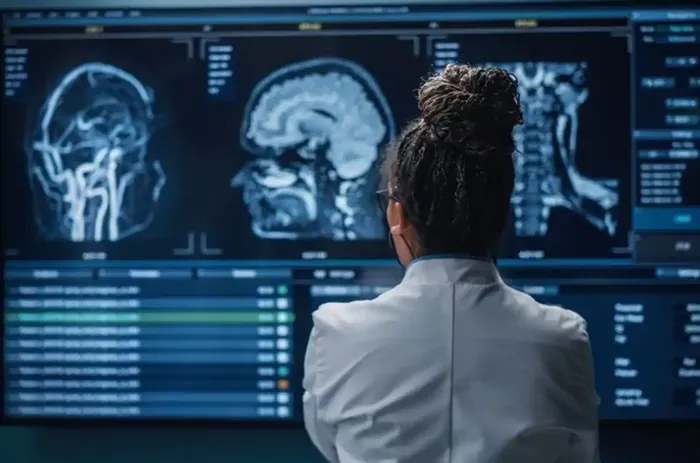
A single brain MRI scan may now be enough to estimate how fast your body is aging — and how at risk you are for serious health problems — according to a groundbreaking new study.
Published on July 1 in Nature Aging, the research introduces a method that uses brain MRI data to calculate a person’s “biological aging” rate. Scientists say this new benchmark could predict an individual’s risk for age-related diseases, including dementia, heart disease, physical frailty, and even early death.
“Our paper presents a new way of measuring how fast a person is aging at any given moment using the information available in a single brain MRI,” said Ahmad Hariri, a Duke University professor of psychology and neuroscience and the study’s lead author.
The tool, called Dunedin Pace of Aging Calculated from Neuroimaging (DunedinPACNI), was developed using decades of health data from more than 1,000 people born in New Zealand in the early 1970s. At age 45, participants underwent brain MRIs, which were then analyzed using a machine learning algorithm.
The algorithm looked at structural features in the brain — including volume, thickness, and the ratio of white to gray matter — and compared them with other signs of aging such as physical ability, cognitive performance, and facial changes like wrinkles.
By doing this, researchers could identify individuals whose bodies were biologically aging faster or slower than average. They found that those with faster aging patterns in the brain also tended to show more physical decline, cognitive impairment, and health issues like heart disease and early mortality.
This method builds on earlier research by the same team that used epigenetic data — specifically, DNA methylation markers in blood — to assess biological aging. But unlike that method, which requires specialized lab testing, DunedinPACNI only requires an MRI, a tool already widely used in hospitals.
The model was tested on additional datasets, including:
- 42,000 scans from the UK Biobank
- 1,700 scans from the Alzheimer’s Disease Neuroimaging Initiative
- 369 scans from BrainLat, covering five South American countries
In all of these datasets, the MRI-based tool performed reliably, linking faster aging to increased risk of chronic illness, stroke, heart attack, and death. Importantly, it worked across different populations and health systems — a major win for its potential widespread application.
“This is a great step forward in how we assess aging,” said Dr. Dan Henderson, a Harvard Medical School physician not involved in the research. “Being able to estimate aging through MRIs, which are already in clinical use, opens the door for earlier and more targeted medical interventions.”
The ultimate goal, according to the researchers, is to integrate this tool into standard medical practice. They envision a future where a routine brain scan could help doctors estimate a patient’s true biological age — and offer earlier interventions to prevent disease.
Co-author Ethan Whitman, a doctoral student at Duke, noted that the ability to predict health decline before symptoms start could be transformative. “We think this is a great example of why it’s important to study aging early — not just after people get sick,” he said.
As scientists continue to refine the model, the hope is that DunedinPACNI could one day become a standard part of personalized, preventative healthcare.
Related topics:
