
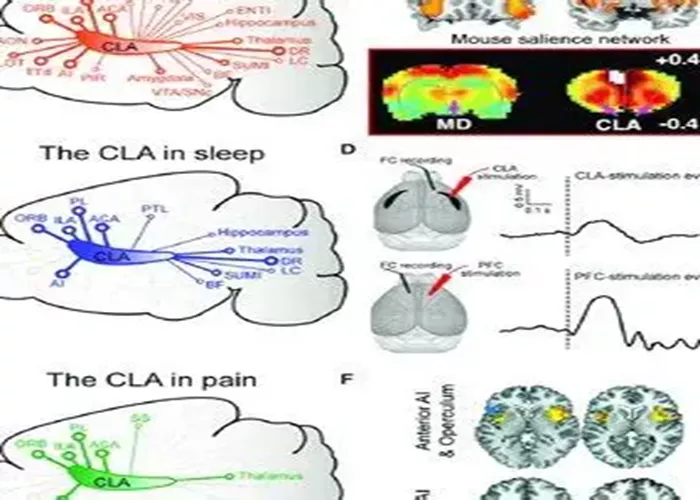
A groundbreaking collaboration involving China’s Institute of Neuroscience (CAS Center for Excellence in Brain Science), BGI Research, France’s INSERM, and other institutions has unveiled the most detailed map of the primate claustrum to date, offering critical insights into this enigmatic brain region long linked to consciousness regulation. Published in Cell, the study combines single-cell spatial transcriptomics and whole-brain connectivity data, marking a major leap in understanding the “brain’s command center.”
The claustrum, a poorly understood structure hypothesized to coordinate global brain activity, has puzzled neuroscientists for decades. The international team analyzed 227,750 cells from macaque monkeys using advanced single-nucleus RNA sequencing and spatial transcriptomics, identifying 48 distinct cell types.
Key findings reveal the claustrum is organized into four functional modules, each with unique cell compositions and connectivity patterns—providing clues to how it integrates signals across brain regions. Researchers also discovered primate-specific cell subtypes, highlighting evolutionary specialization that may underpin complex cognitive functions.
“This modular architecture explains how the claustrum synchronizes diverse brain networks,” noted Dr. Shen Zhiming from the CAS Center. The work holds profound implications: precise modulation of claustrum activity could one day enable targeted treatments for mood disorders like depression by regulating global brain states.
Complementing this, a parallel breakthrough from the team addressed a longstanding barrier in primate research: lack of cell-specific targeting tools. By analyzing single-cell RNA and ATAC sequencing data, they identified cell-type-specific enhancers—genetic “switches” that activate gene expression in specific cells. Using these, the team developed 112 adeno-associated virus (AAV) vectors, which act like “precision missiles” to label or manipulate distinct cell types (e.g., excitatory/inhibitory neurons, glia) without relying on transgenic animals.
“This toolkit transforms primate brain research from vague observation to precise targeting,” said Dr. Liu Zhen. It fills a critical gap in studying neural circuits, enabling unprecedented precision in mapping and manipulating claustrum functions.
Together, these advances provide a foundational framework for decoding consciousness and developing therapies for brain disorders, bridging the gap between basic neuroscience and clinical applications.
Related topics:
Poor Chewing Ability and Depression Together Raise Risk of Constipation
Traumatic Birth Leaves Swansea Mother With PTSD and Depression
IVF Devices Market to Grow Rapidly, Reaching $13.5 Billion by 2034
