
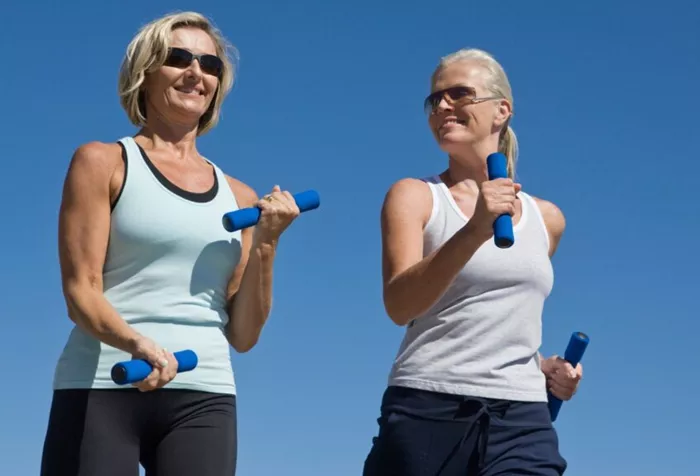
Walking is one of the easiest and most effective forms of exercise. Adding weights to your walk can increase the intensity and calorie burn—but it also brings certain risks. Here’s what happens to your body when you walk with weights, and how to do it safely.
1. Weighted Vests Burn More Calories With Lower Risk
Using a weighted vest is one of the safest and most effective ways to enhance your walk. These vests strap securely to your torso and allow you to add or remove weight as needed.
Studies show that walking with a vest that equals 10% of your body weight can help you burn about 13% more calories, especially when walking on an incline. Besides increasing calorie burn, the added pressure on your bones may stimulate new bone cell growth and help prevent bone loss.
Since the weight is centered on your core, a vest doesn’t throw off your balance or put stress on your arms or legs like ankle or wrist weights might. Still, if you have neck or back problems, speak to a doctor before using one.
2. Weighted Backpacks Boost Strength, But Require Good Posture
Another popular option is walking with a weighted backpack, also known as “rucking.” This method involves carrying a backpack specially designed for exercise, often with padded shoulder and chest straps.
Rucking increases exercise intensity, helping build strength and burn more calories. However, it’s important to maintain proper posture. Keep your spine straight, avoid leaning forward or backward, and engage your core muscles to support your lower back.
Without correct form, the extra weight may lead to back strain or injury.
3. Ankle Weights Target Thighs, But Can Stress Joints
Ankle weights are easy to use—just strap them on and walk. But they can shift your natural gait and cause muscle imbalances. These weights tend to make your quadriceps work harder than your hamstrings, which could increase the risk of strain or injury.
They also place added stress on the ankle joints and may lead to problems in the knees, hips, or lower back. While ankle weights may be useful for strength exercises like leg lifts, they’re not ideal for walking.
4. Hand and Wrist Weights Raise Risk of Upper Body Injury
Hand and wrist weights can also disrupt your natural walking rhythm. They may put strain on your wrists, elbows, shoulders, and even your neck. Like ankle weights, they often cause more harm than good when used during a walk.
However, wrist weights can be helpful for people who want to do arm exercises but can’t grip dumbbells. Use them only for short sessions and avoid swinging your arms too forcefully.
5. Walking Alone Offers Big Health Benefits
Even without weights, walking provides many health advantages. It’s a powerful cardiovascular workout with well-documented benefits, such as:
- Lowering blood pressure and heart rate in people with hypertension
- Supporting digestion after meals
- Improving sleep quality
- Enhancing overall quality of life
The addition of weights can amplify some of these benefits, but walking on its own is still one of the most beneficial activities for health.
6. Important Safety Tips Before Adding Weights
Adding weights to your walk can increase calorie burn and strength, but it’s not without risk. Talk to a doctor before starting, especially if you have joint or muscle issues.
Extra weight can put stress on joints and soft tissue, potentially causing strain or injury. If you decide to add weights, follow these safety tips:
Start light: Begin with lighter weights and gradually increase.
Don’t overdo it: Avoid using weights for every walk. Take rest days.
Short sessions first: Keep weighted walks short at the beginning.
Check your posture: Good form prevents injury. Keep your back straight, shoulders relaxed, and eyes forward. Swing your arms naturally from the shoulders and maintain a neutral pelvis.
7. What to Look for in a Good Weighted Vest
Choosing the right vest can make a big difference in both comfort and results. Look for features like:
- Adjustable straps
- Breathable fabric
- Comfortable fit
- Removable weight pockets
Try different styles to find one that fits your body type and walking style.
Key Takeaways
Walking with weights increases calorie burn and muscle activation.
Weighted vests and backpacks are generally safer than ankle or wrist weights.
Always prioritize good posture and start with light weights.
Speak to a healthcare provider before making changes to your exercise routine.
Adding weights can turn your daily walk into a more powerful workout—but only if done carefully and correctly.
READ MORE
