
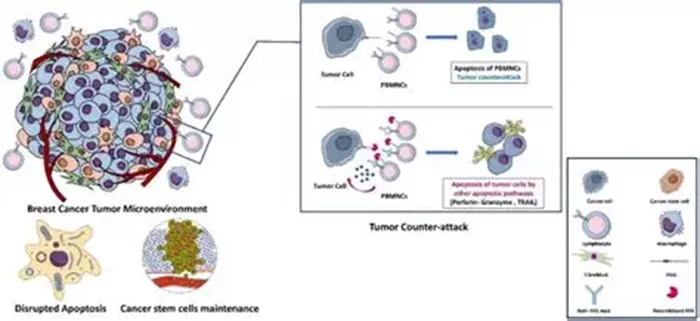
A team from the UC Davis Comprehensive Cancer Center has found that a key genetic mutation in the human immune protein Fas ligand (FasL) could make humans more prone to cancer than close relatives like chimpanzees. The study, published in the latest Nature Communications, offers crucial clues for developing new cancer therapies.
FasL is a vital weapon of immune cells, triggering cell apoptosis. Activated immune cells—including chimeric antigen receptor T (CAR-T) cells engineered from a patient’s immune system—use this mechanism to kill cancer cells. Plasmin, a protease, is often elevated in patients with aggressive solid tumors such as triple-negative breast cancer, intestinal cancer, and ovarian cancer.
The new research revealed that in the solid tumor microenvironment, elevated plasmin acts like “molecular scissors,” specifically cutting mutated FasL and disabling its anti-cancer function. This human-specific vulnerability gives tumors an advantage. It explains why immunotherapies like CAR-T work well for blood cancers (which typically don’t rely on plasmin to spread) but struggle with solid tumors like breast cancer, which depend heavily on plasmin for dissemination.
The FasL mutation may have contributed to increased human brain size but alsoa predisposition to cancer. This discovery resembles finding a “code lock” for immunotherapy: blocking plasmin or protecting FasL could reactivate the immune system’s anti-cancer ability, offering new approaches to treat tough cancers like triple-negative breast cancer. Combining plasmin inhibitors with existing therapies might significantly boost treatment efficacy.
Why humans have a higher cancer rate than other primates has long puzzled scientists. Learning from close relatives like chimpanzees may hold the key to new anti-cancer strategies.
Related topics:
Exercise Helps Mental Health, But Context Matters Most
Philadelphia Ranked Among America’s Most Stressed Cities
New Review Downplays Antidepressant Withdrawal Risks in Long-Term Users
