
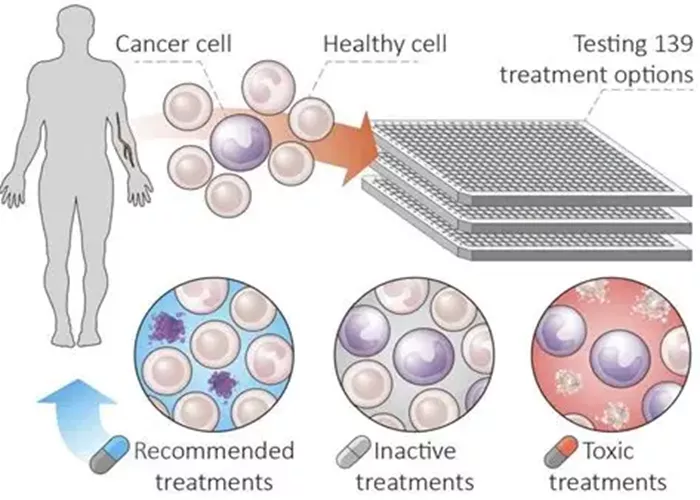
A team from the University of Pennsylvania’s Perelman School of Medicine and New York University’s Tandon School of Engineering has developed a micro-laboratory device, the “leukemia chip,” bringing closer the goal of precise treatment for leukemia and other cancers. Published in the latest Nature Biomedical Engineering, the breakthrough marks a new phase in personalized immunotherapy research.
Chimeric antigen receptor (CAR) T-cell therapy, a major advance in cancer treatment, modifies patients’ own immune cells to recognize and attack cancer cells, offering hope for blood malignancies—especially leukemia—often as a last resort when traditional therapies fail.
However, nearly half of patients relapse, and some experience severe side effects. Traditional 2D cell cultures and animal models struggle to explain these individual differences, prompting the search for better testing tools. The new chip, roughly the size of a microscope slide, simulates the 3D structure of bone marrow and integrates a functional human immune system. It is the first to replicate both the bone marrow microenvironment and real immune responses in a lab, providing an unprecedentedly precise platform to study how CAR-T cells target leukemia.
The chip recreates three key bone marrow regions: blood vessels, marrow cavities, and outer bone linings. When implanted with patient-derived marrow cells, they self-assemble into a structural support network (including collagen, fibronectin, and laminin), preserving both physical frameworks and complex immune microenvironments. Using advanced imaging, the team for the first time clearly recorded CAR-T cells “patrolling” simulated blood vessels, identifying, and eliminating cancer cells.
The chip successfully replicated common clinical outcomes: complete remission, drug resistance, and initial response followed by relapse. Tests showed next-gen CAR-T cells outperformed traditional versions at low doses.
Assembled in half a day and supporting two-week continuous experiments—compared to months for animal models—the chip allows observation of cancer treatment in a fully controlled environment without relying on animal tests.
Recently, the U.S. FDA announced plans to reduce reliance on animal testing in drug development (e.g., for monoclonal antibodies) and outlined alternative roadmaps. This interdisciplinary collaboration—merging bioengineering and immunology—creates a system that reflects complex CAR-T interactions in disease and enables intervention testing. Soon, doctors may use such chips to test patient cancer cells’ responses to therapies before treatment, tailoring plans to individuals rather than using a one-size-fits-all approach.
Related topics:
Kelly Ripa’s Favorite Teeth Whitening System Is Now 20% Off…
UK Approves First Non-Hormonal Pill for Menopausal Hot Flushes
South Asian Women Face Faster Aging and Early Menopause, Experts…
